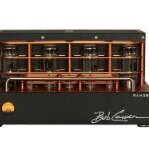
Ar9Jim 6,520 Posted December 19, 2023 Posted December 19, 2023 (edited) Yes they do. Yes they can. While spending 6 weeks at Bob's home and at his lab in Snohomish this year, voicing was a design detail that had to be right for the new products. Much of the voicing is in the design itself. Bob likes the sound of a "bouncy" "springy", higher voltage, more loosely regulated power supply, over the more common theory to design for highly regulated and 'stiff' power supplies. "After decades of testing, I've found this way to sound best." Bob Carver. I asked the question, how do you get a supply to act springy and bouncy? "The smaller power transformer will have voltage sag under load, but I start with higher voltage by about 200v, 685v in the 275 and closer to 300v higher in the 285, so it can sag and bounce without the voltage going too low driving loudspeakers. This allows lighter weigh, has lower cost to produce and sounds best to me over decades of study." This design philosophy has a big effect on the Carver sound and goes against what many have been taught in school, so many that are not physicist cry out as if the design is flawed or "cheap". Physicist get a thrill out of designing lighter, lower cost, better performing products leveraging the laws of physics. It's in their DNA.. Similar with the tiny subwoofers. You can shrink the box, if you can supply enough power to make the equation work out. If you do it right like Bob can, it looks "amazing". Some voicing effects can be seen in frequency response graphs. They are subtle within about .25db. Bob recognizes these details in graphs as a way of knowing his design was not "improved" by manufacturing. One of the few times I've seen Bob angry was the mention of improving his power supply design for the 275 thinking about 'stiffening it up'. "Nobody touches my design!" "With good intension they with think they are making it better and F--k it up!" Edited December 19, 2023 by Ar9Jim 1
Recommended Posts