Ar9Jim 6,556 Posted December 28, 2023 Posted December 28, 2023 (edited) Over the past few years some experience with tubes and some observations may help you. Years ago having a KT-120 flash on start-up after being shipped with the same tubes as used during burn-in was an issue. There were impurities that could move around and then get vaporized and collected by the getters (those shiny mirror disc inside the tube), this rare occurrence would blow the B+ fuse in the amp.. After the fuse was replaced all was well again. The Carver design doesn't require matched sets of tubes. That being said, if we ordered matched quads of tubes the issue occurred much less often. The matching process seemed to provide another level of quality control and longer burn time for matching sets. The days of tube flash were effectively solved my buying matched quads and hasn't been an issue in 2-3 years. The quality issue at the factory went away in the mean time. There is another reason to buy matched tubes. The unmatched tolerance allows a wide variability in tubes. If you don't buy matched sets (at least pairs) it's a bit of a crap shoot as to how far apart the tubes may be. Although technically the DC Restorer circuit eliminates the need for matched power tubes, without specifying matched tubes, the mismatch can be so far off to cause bias instability in rare cases. You may want to consider this, even if you need just one tube, if you can buy 2 and get a matched pair with measurements included, rather than just a pass/fail inspection, the quality control seems better than buying unmatched. The matching charge is well worth the extra quality control it provides from our experience with quantities. Enjoy the Music. Edited December 28, 2023 by Ar9Jim 2
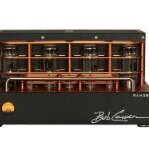
Ar9Jim 6,556 Posted December 29, 2023 Author Posted December 29, 2023 (edited) This morning we tested 16- un-matched tubes and 8 (2 matched quads) for 24 in all. All the tubes test strong on the basic tube test given on a restored Knight 600B. This is not a pro grade device, but is good for checking for shorts, gas, filaments but it's not an emissions type tester. We normally buy matched quads and let the factory do the sorting. The next test was using a Crimson 275 to check the bias current at full plate voltage, using the 275 power supply providing 685 volts to the plates of each tube individually. The matched quads bias current came in the same with the 4 tubes drawing the same bias current within 5mA on both quads. (100mA, 100mA, 100mA, 95mA) and (75mA, 75mA, 75mA, 70mA) respectively. The 16 unmatched tubes had variation from 55mA to 110mA in this test as described below. It's simple and informative under actual voltage. Matched quads are really the way to go in push pull stereo tube amps, imho.. Using your Bob Carver amp as a Tube Tester: The front panel meter may be used to test the tubes. • Remove all the power output tubes • Plug the amp into the AC wall socket with the main rear panel power switch OFF. • Insert the tube you wish to test into socket four (the far-right large tube socket). Turn the bias control fully clockwise, then turn the main power switch ON. With a watch, time the warm-up period for exactly one and a half minutes and note the current reading. Turn the amplifier OFF. • Remove the tube and insert the next one. You can hold the tube with your bare fingers — it will not be too hot after only a minute and a half, provided it was cool to start with. • Keep track of each reading, and repeat until all tubes have been checked. If any single tube does not bias up or “runs away” with its cur-rent climbing substantially higher, ≈200% than the others, then it must be replaced. • It is okay to turn the amp on and off at will. • Return the BIAS CONTROL to its original position and put all the tubes back into their sockets. This completes the tube testing operation. Enjoy the Music! Edited December 29, 2023 by Ar9Jim



Recommended Posts