


Nahash5150
-
Posts
8,054 -
Joined
-
Last visited
-
Days Won
391
Content Type
Forums
Events
Articles
Downloads
Gallery
Store
Posts posted by Nahash5150
-
-
Please take the poll to show interest if you'd like a project to build.
-
6 hours ago, AndrewJohn said:
Super nice, @Nahash5150, Love seeing the process in images. @davidc is gonna' love this.
Curious to ask, what does the LED sensitivity switch do? I did look on NelionAudio.com for a mod option description - may have missed it.
Thanks in advance.
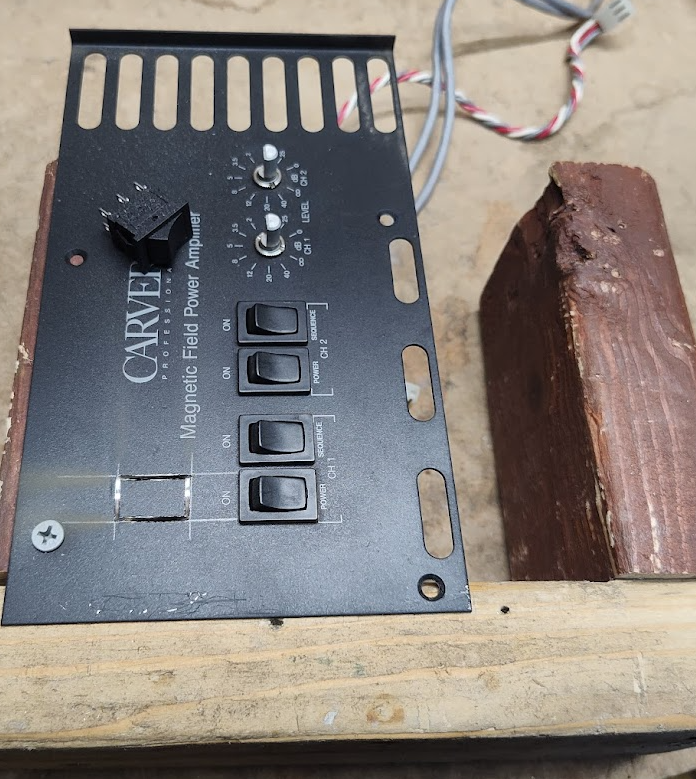
The LED sensitivity switch will allow the LEDs to 'bounce around' or respond, at lower volume levels. You really have to be hammering it to get the LEDs to respond from the factory. Here's a comparison:
Here's the LED power estimates into 6 OHMS:
Indicator - normal / high sensitivity
LED 1 - 20W / 1W
LED 2 - 42W / 2.5W
LED 3 - 72W / 4.5W
LED 4 - 185W / 11W
LED 5 - 330W / 20WSorry - I don't have it on the site yet.
-
 1
1
-
-
1 hour ago, BobTFM35 said:
I'm assuming that they are the original tubes? Interesting to see that the unit used 6L6.
Yes - I think they are. As for the pre-tubes - no idea. But I had to provide the AU's cuz Bill didn't send me any!
-
1
-
-
46 minutes ago, BobTFM35 said:
That looks like a NOS amp!!
Great job on the grill restoration. Ultrasonic cleaning?
Thank you!
Scrubbed down with demineralized water.
-
1
-
-
This is for @davidc.
A typical dirty and rusty specimen!
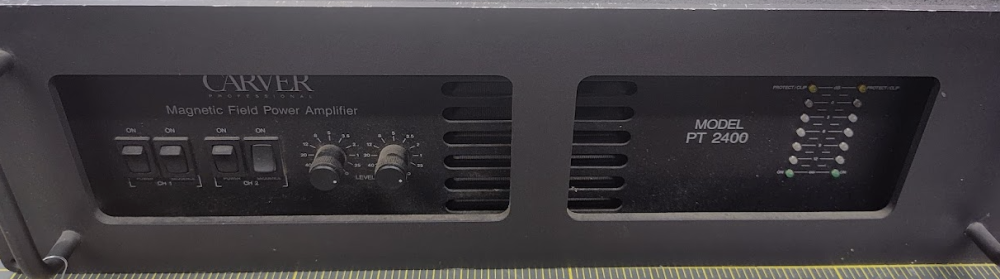
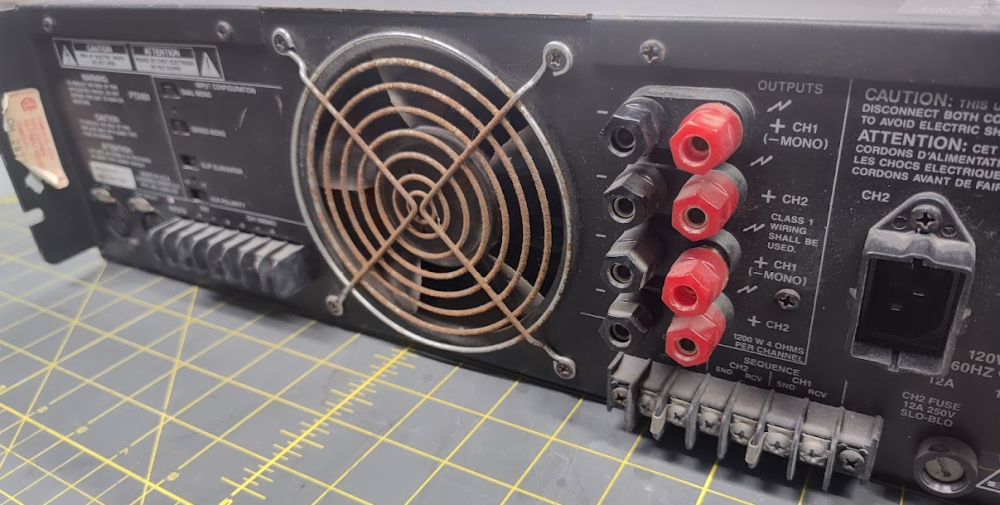
Decent shape. No severe burning so that's a great start.
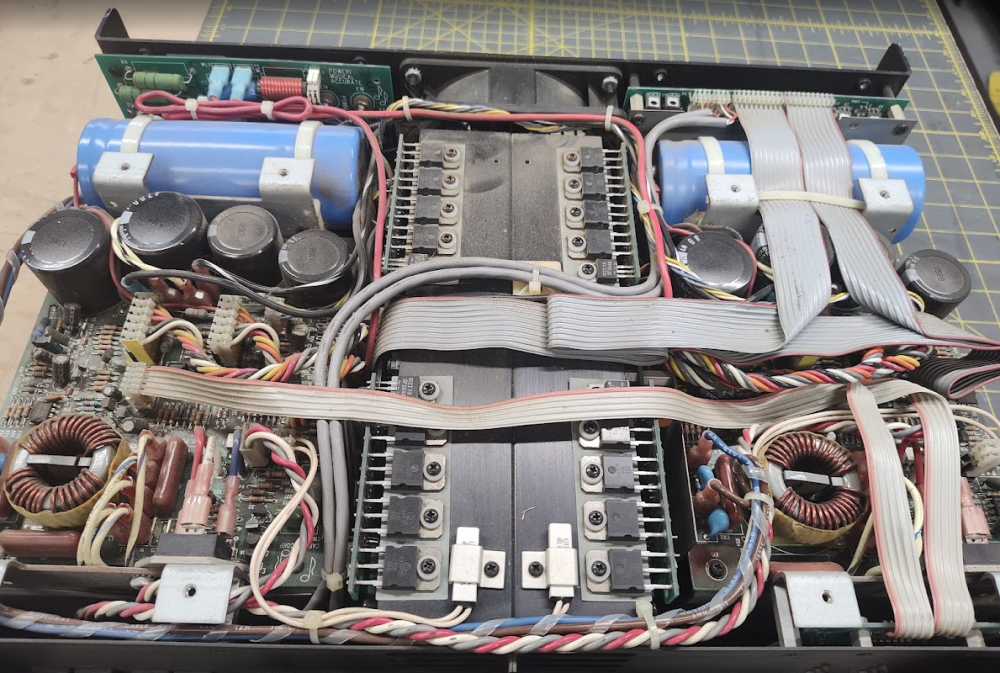
Tear down. Lots of dirt. I will take care of that rusty fan grill, and install a new quiet fan and turn down the speed to make it QUIET.
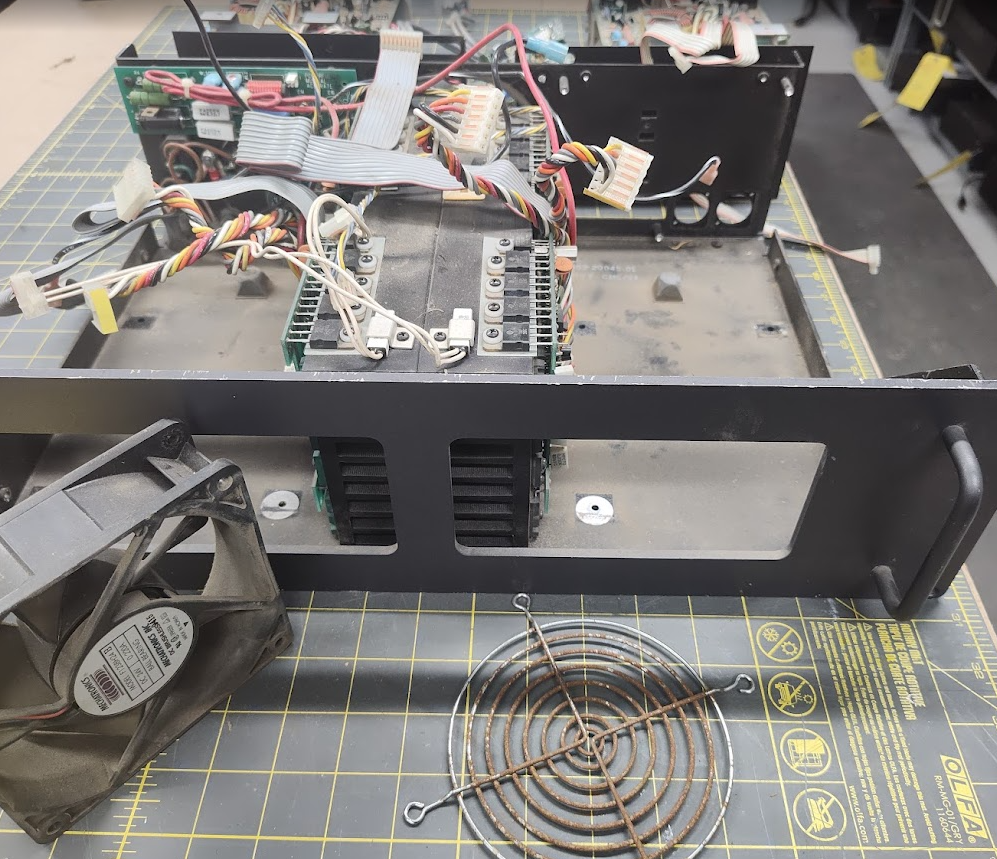
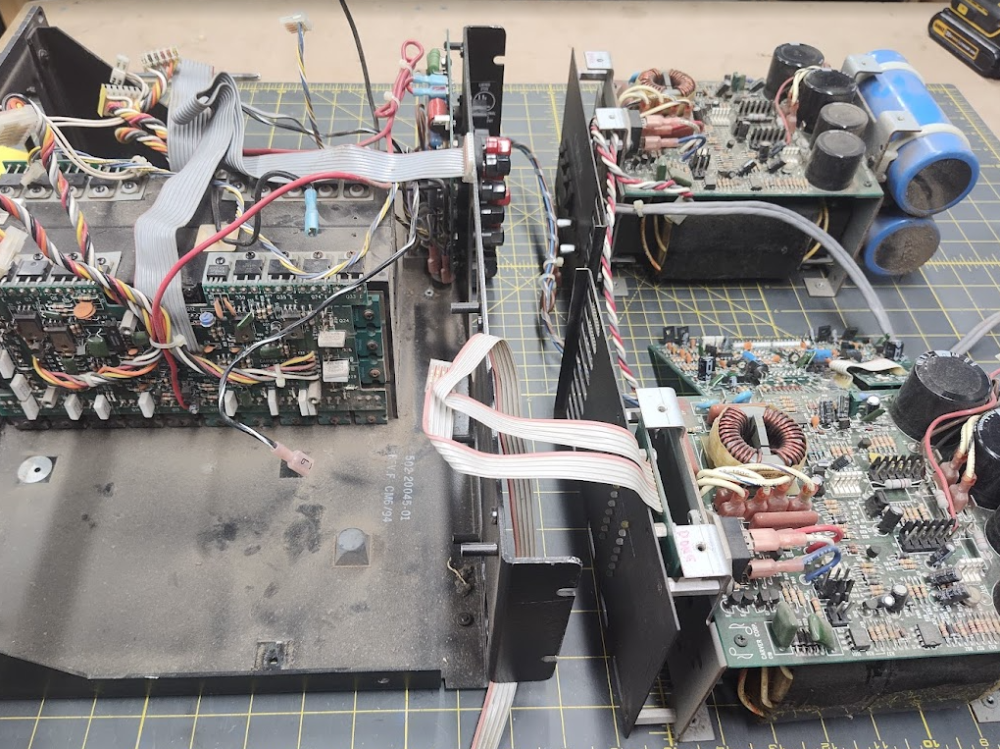
Chassis cleaned up and tested. Had to replace some bad transistors. Typical.
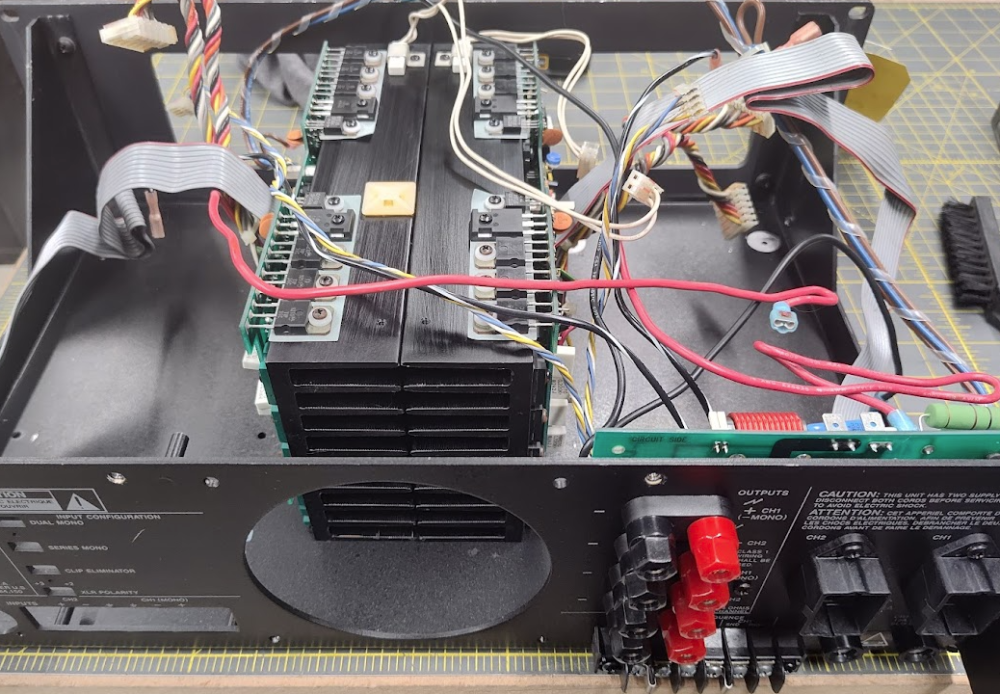
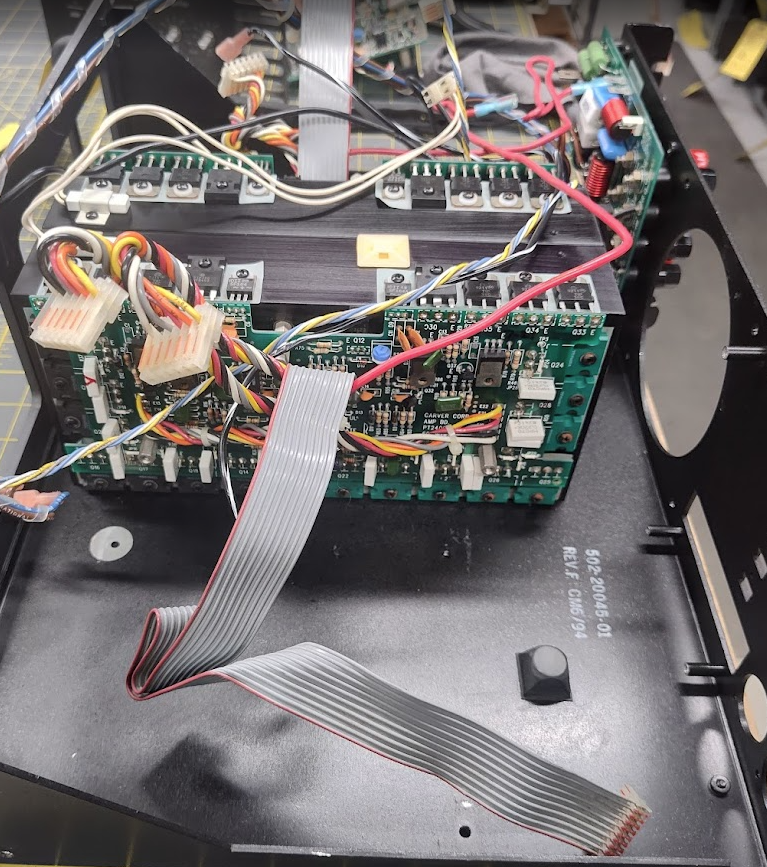
An LED sensitivity switch was requested, so I'm cutting one out here:
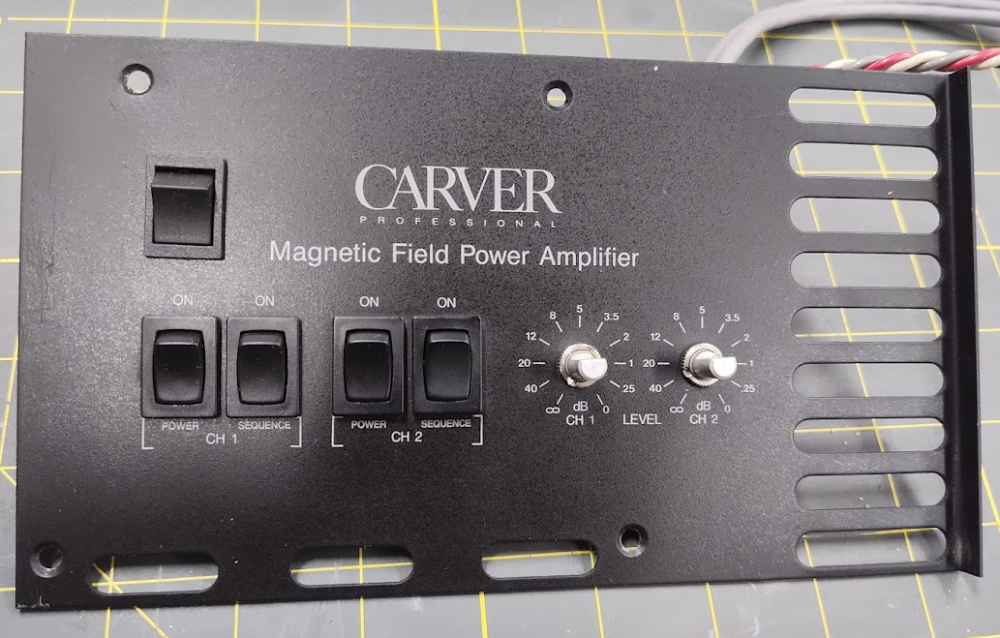
Everything cleaned and rebuilt!
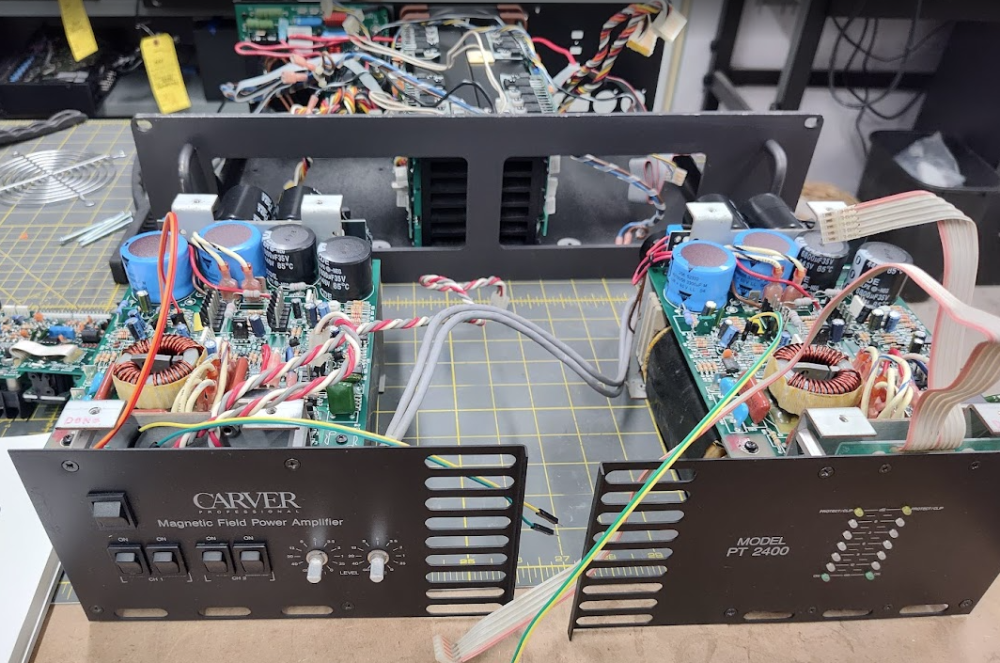
New fan and restored grill:
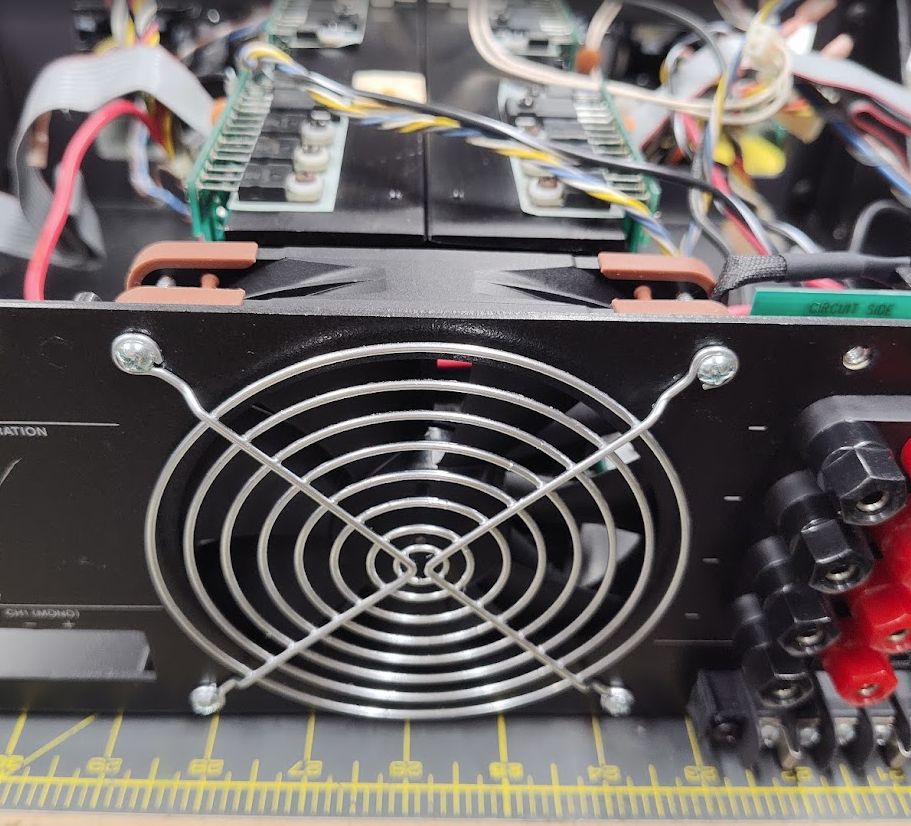
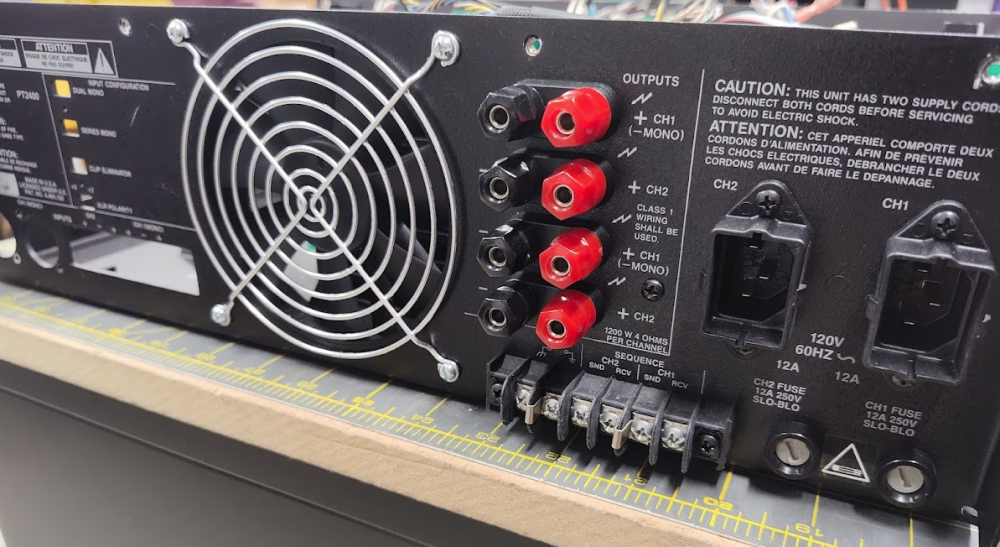
All back together:
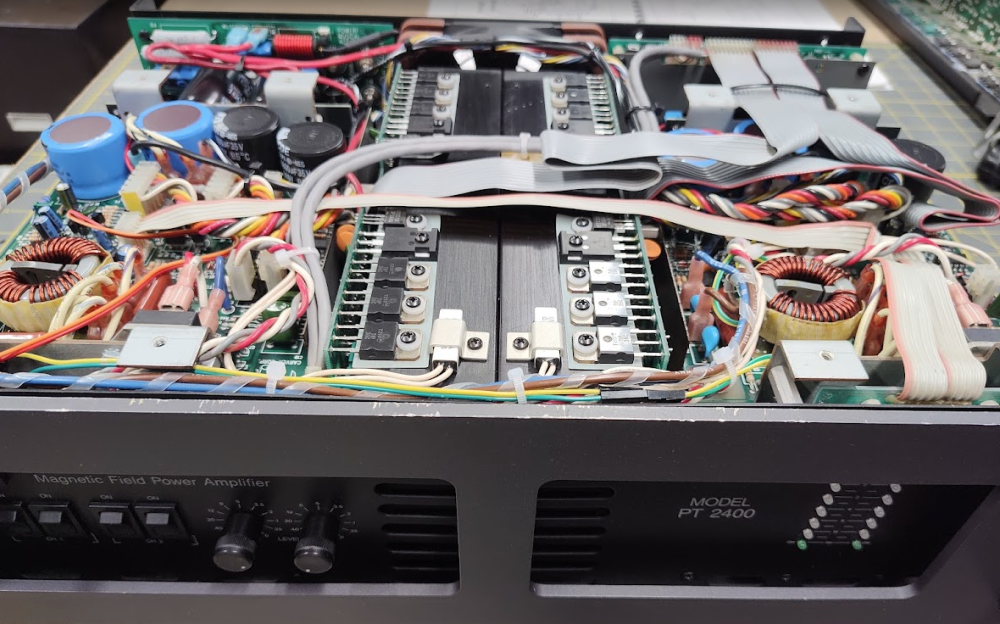
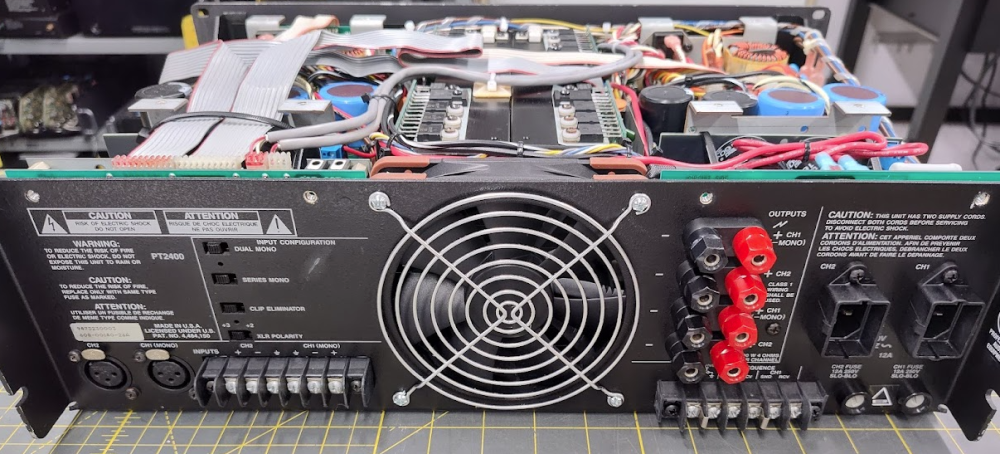
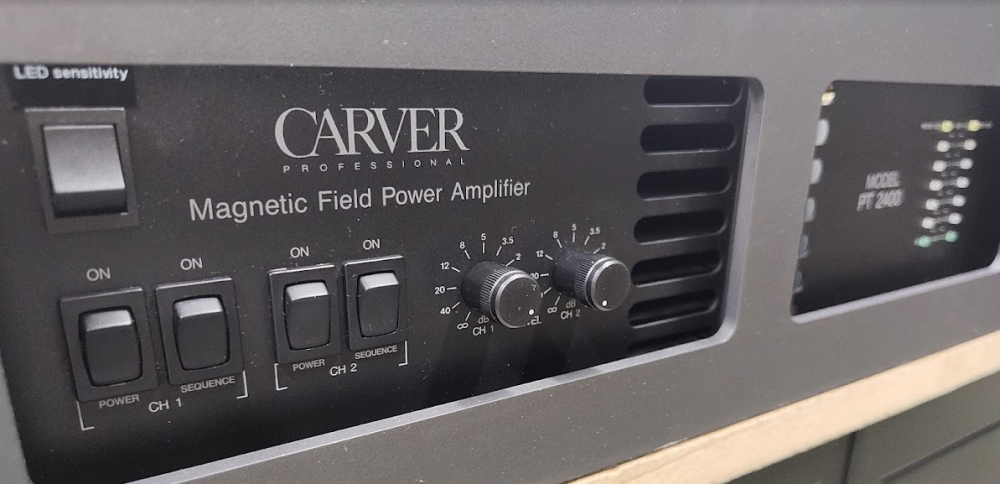
Best sounding 750W per cannel amp ever!
-
2
-
 3
3
-
 2
2
-
-
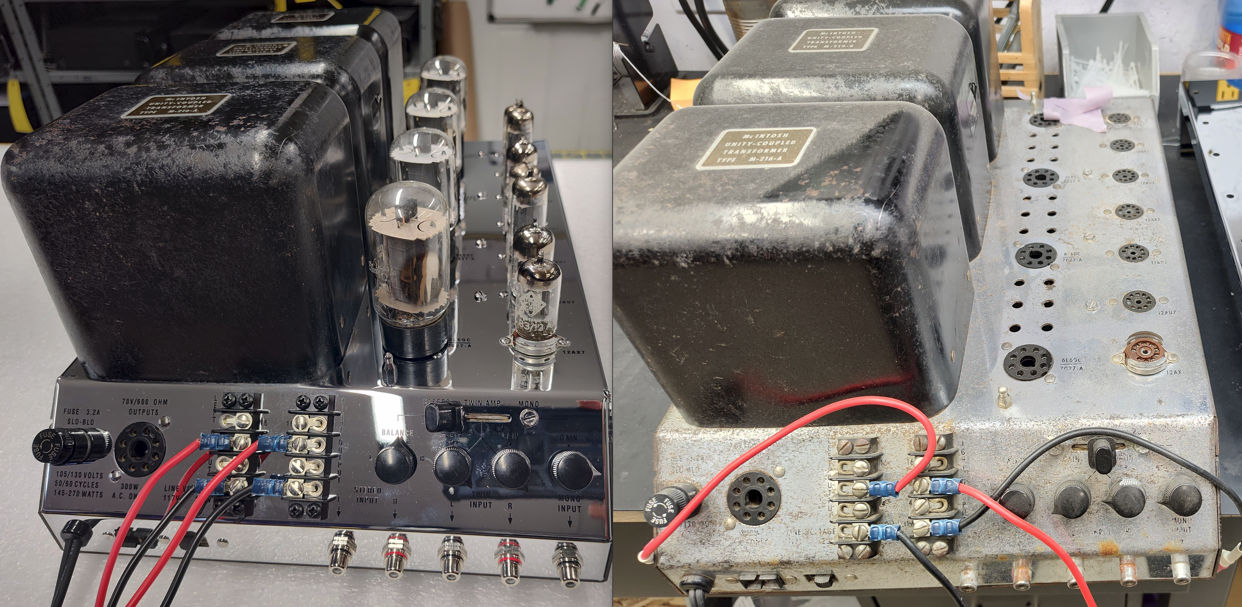
And a side-by-side:
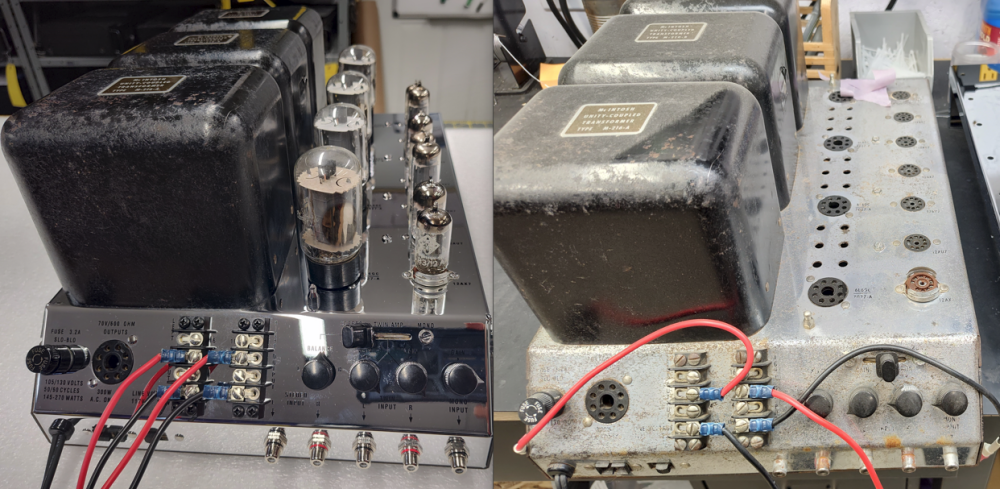
It's really hard to take pictures of this thing because it's like a mirror and I keep spotting myself in the shot!
-
1
-
1
-
-
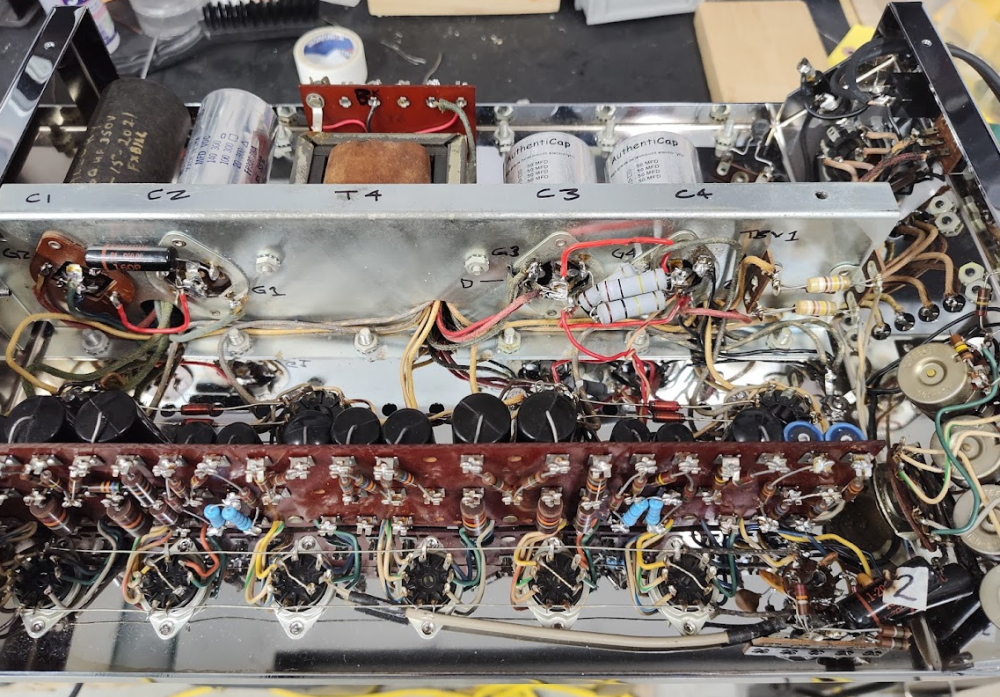
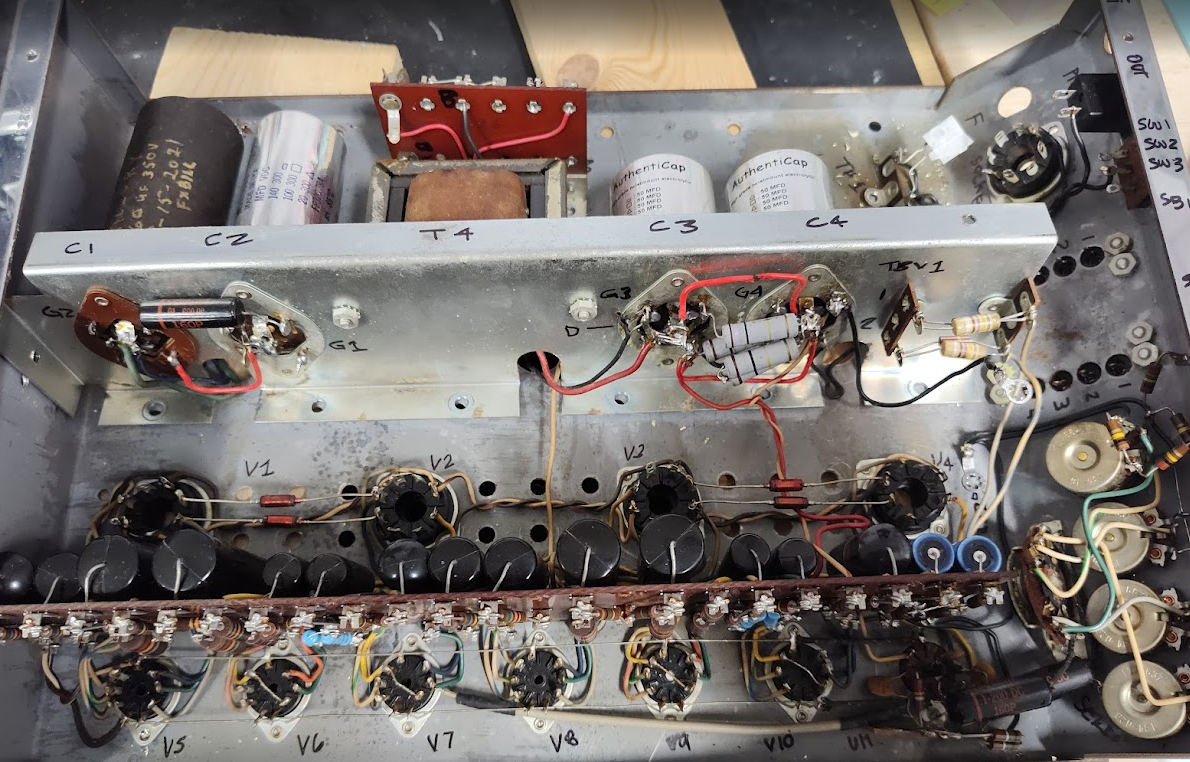
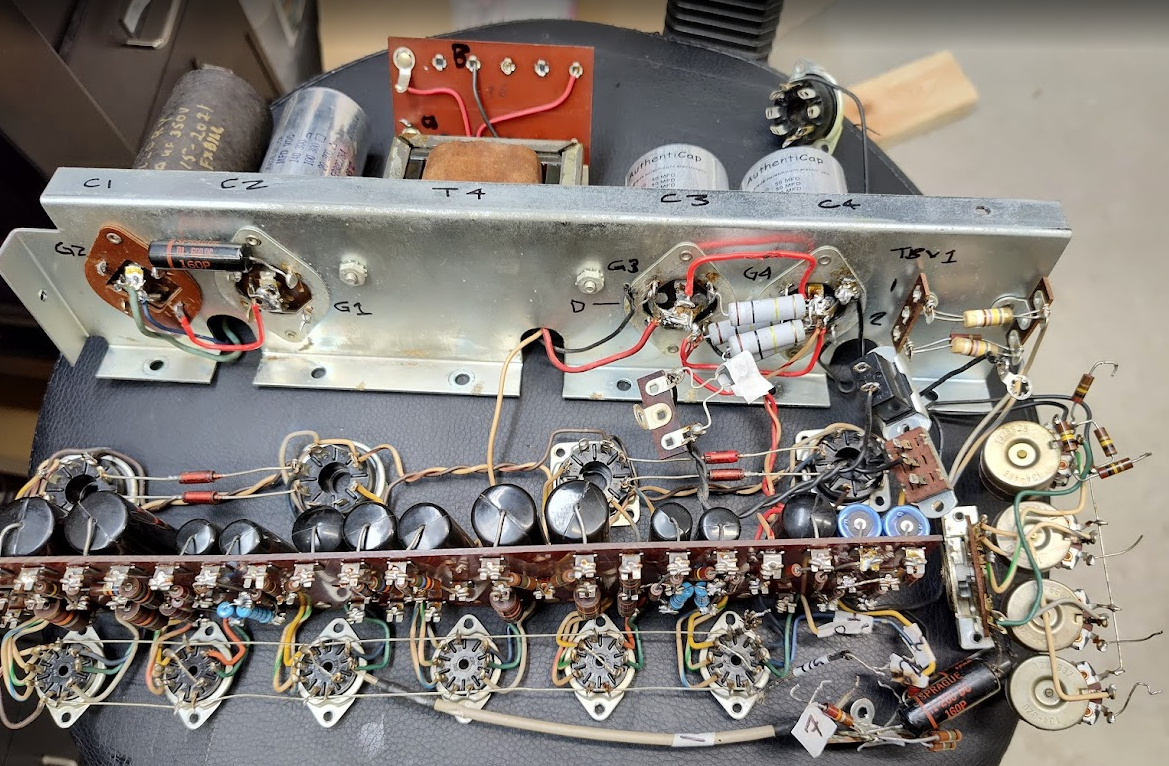
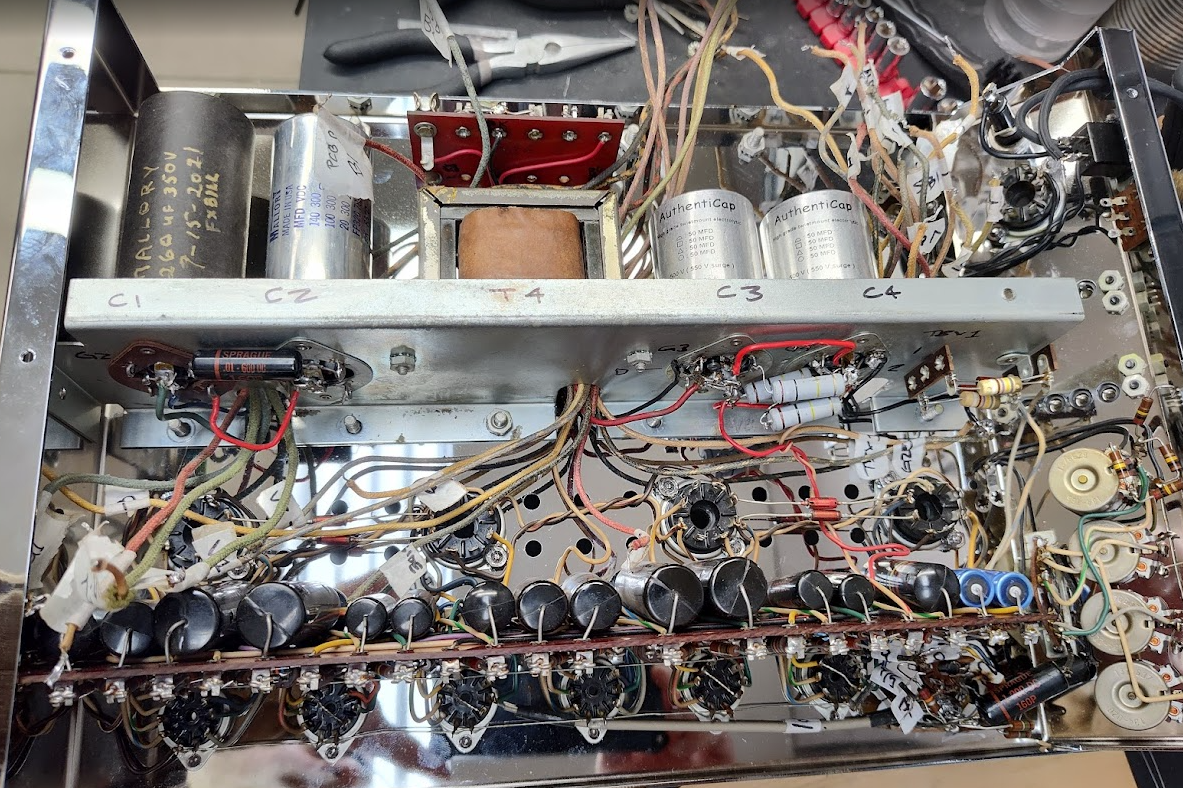
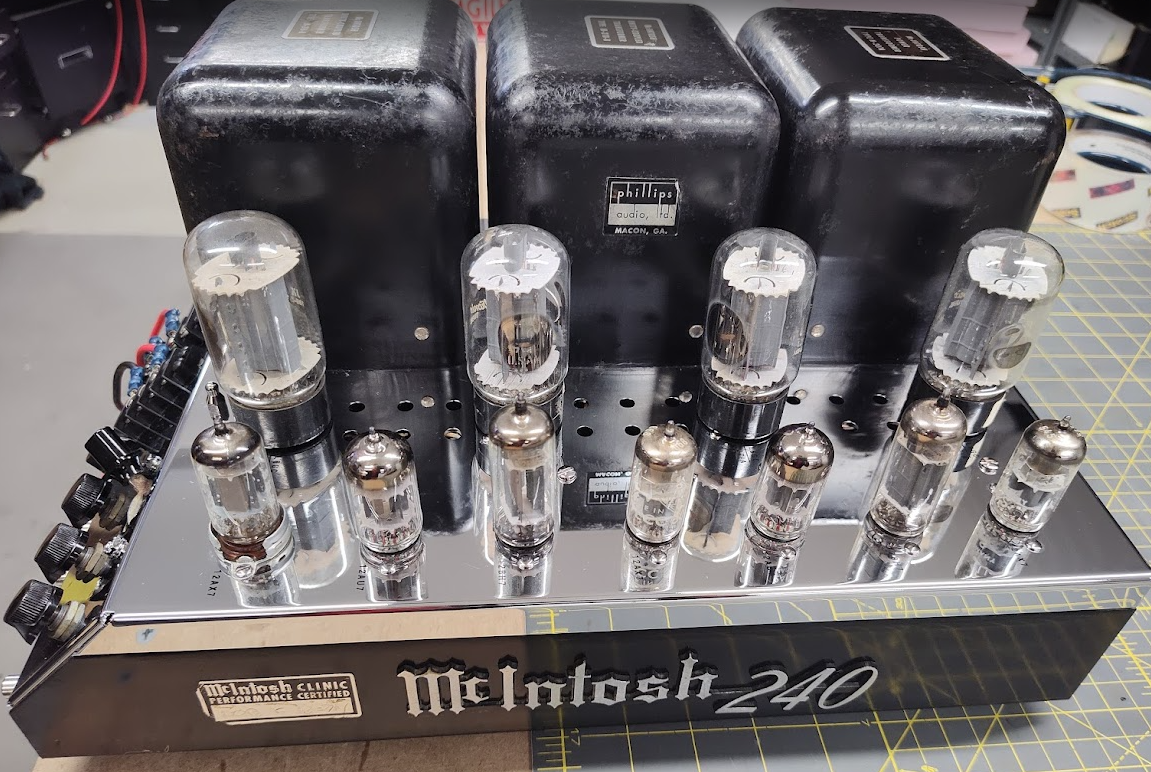
Transformer out! Parts of this thing haven't been seen by human eyes for over 50 years!
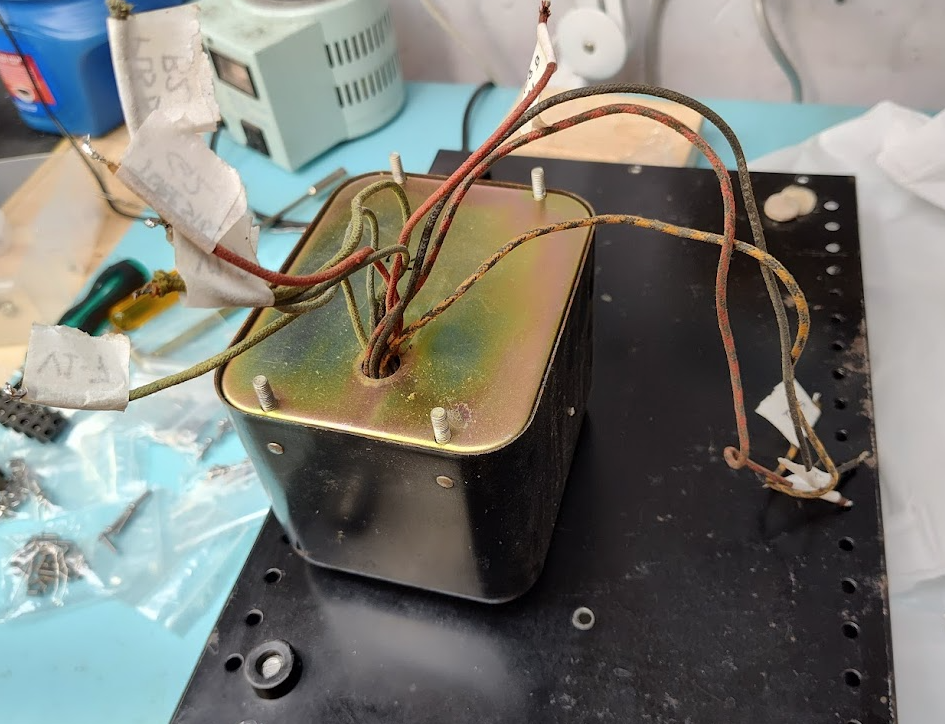
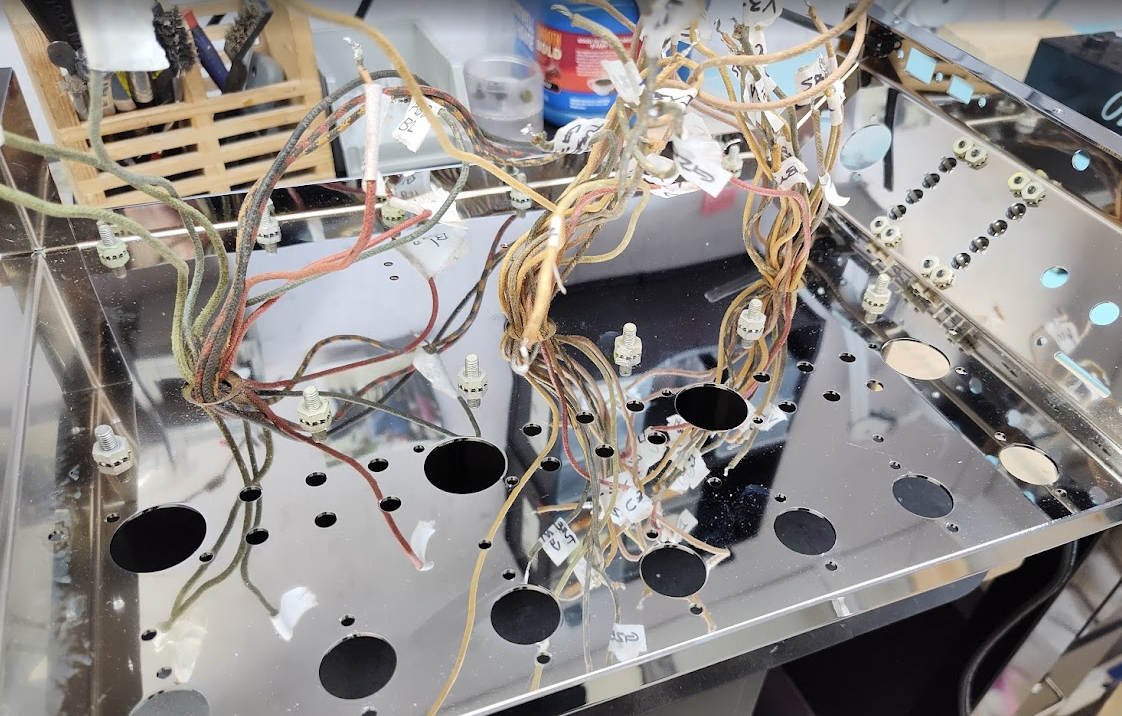
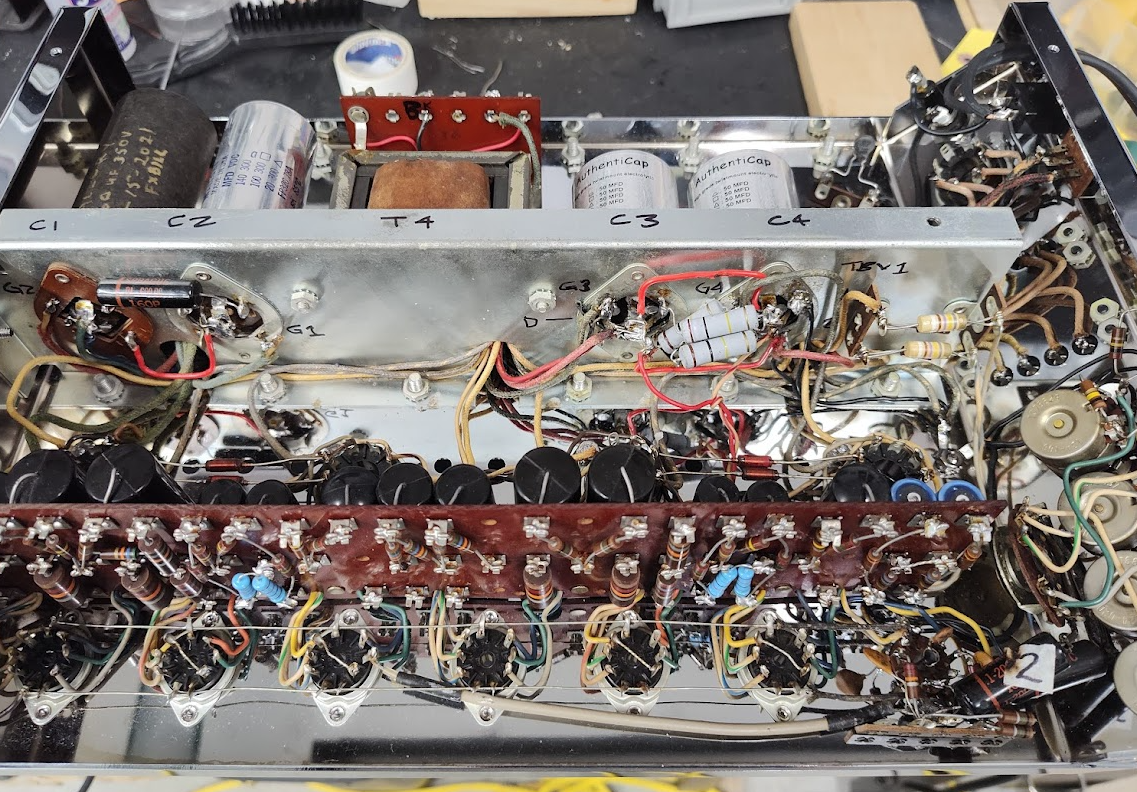
Looking simpler with the transformer wires out.
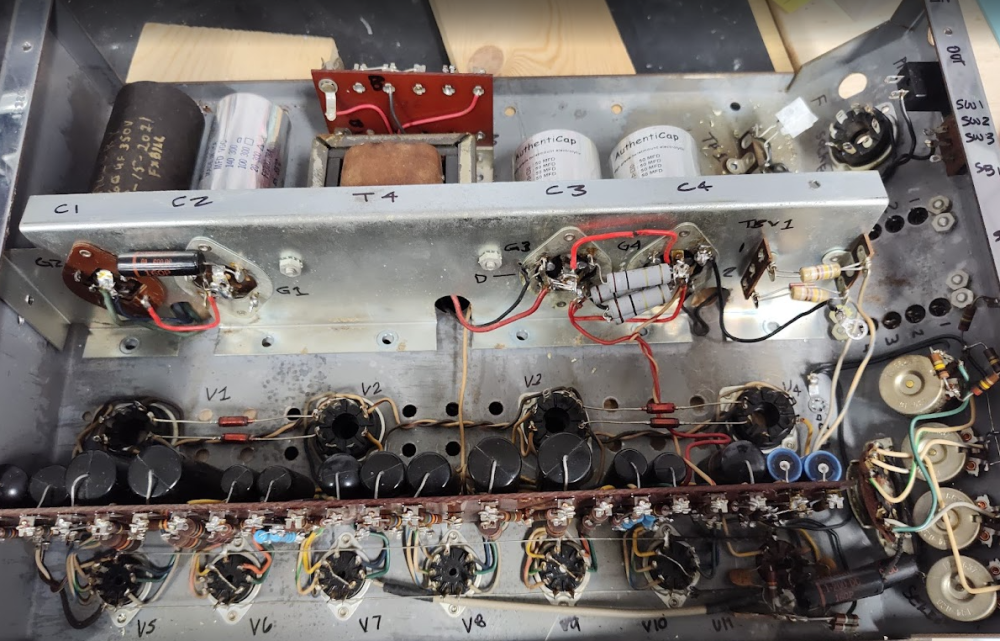
Its out!!!!

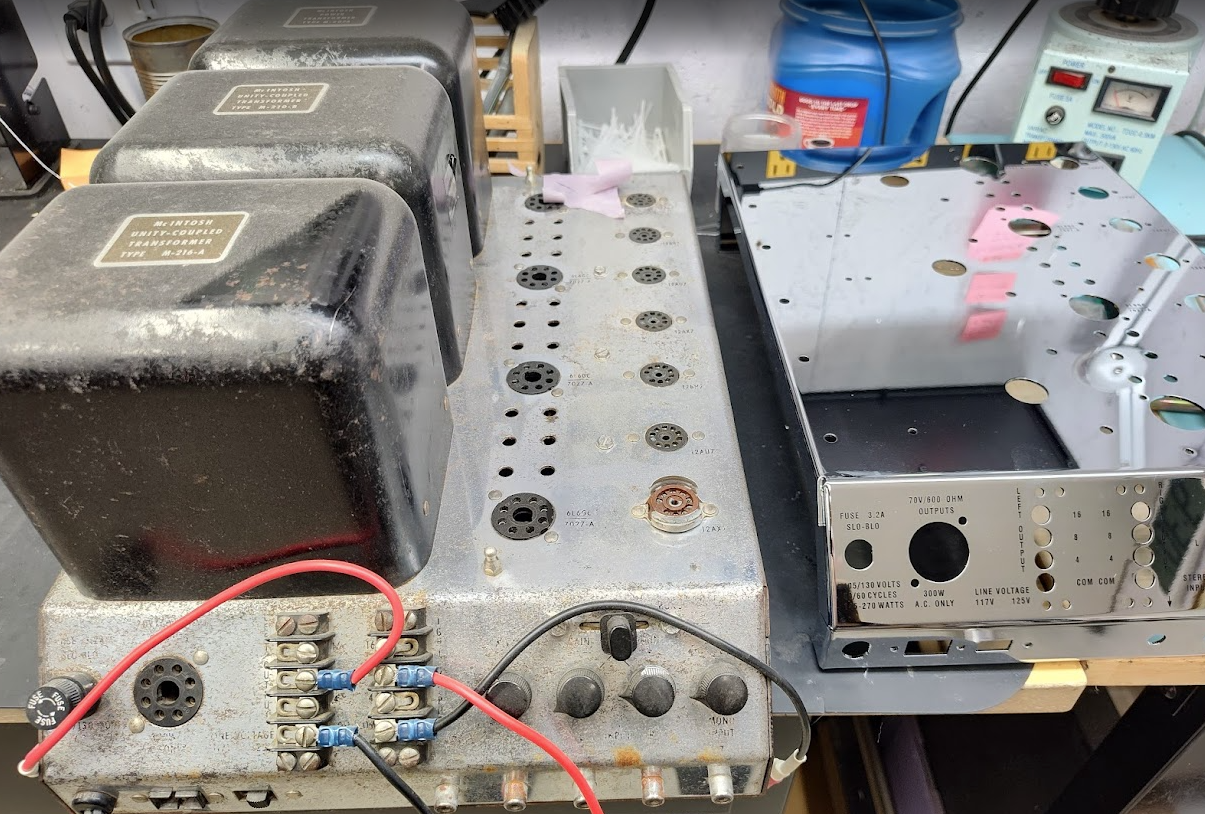
Transformers through the new chassis. This was HARD. Each transformer is so heavy, and the wires are stiff and don't want to move, so getting each one set over the holes - both the wire entry and screw mount holes, is a real challenge.
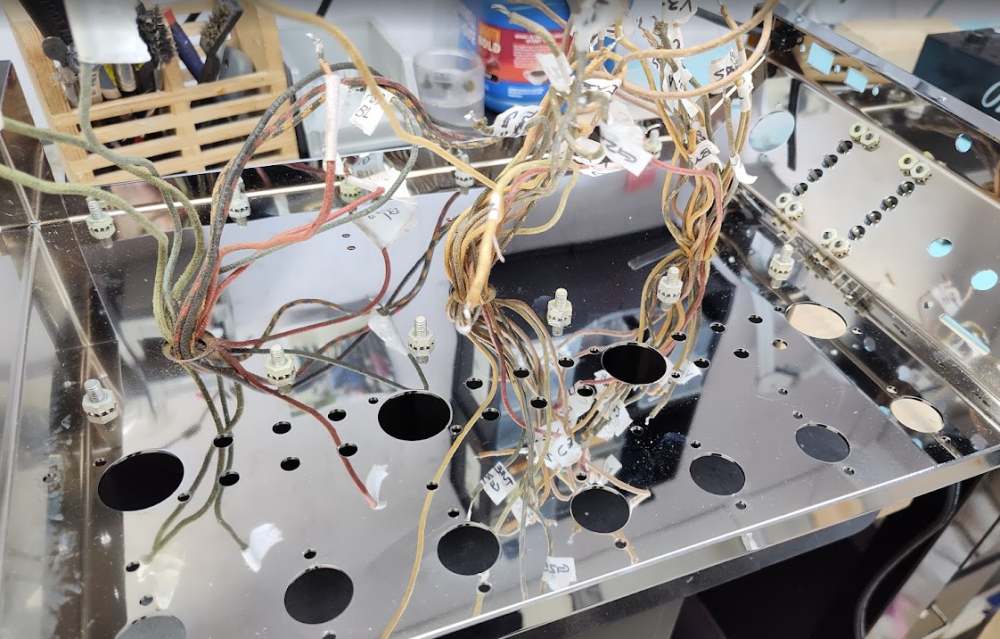
Riveted and screwed in - still a lot of soldering to do.
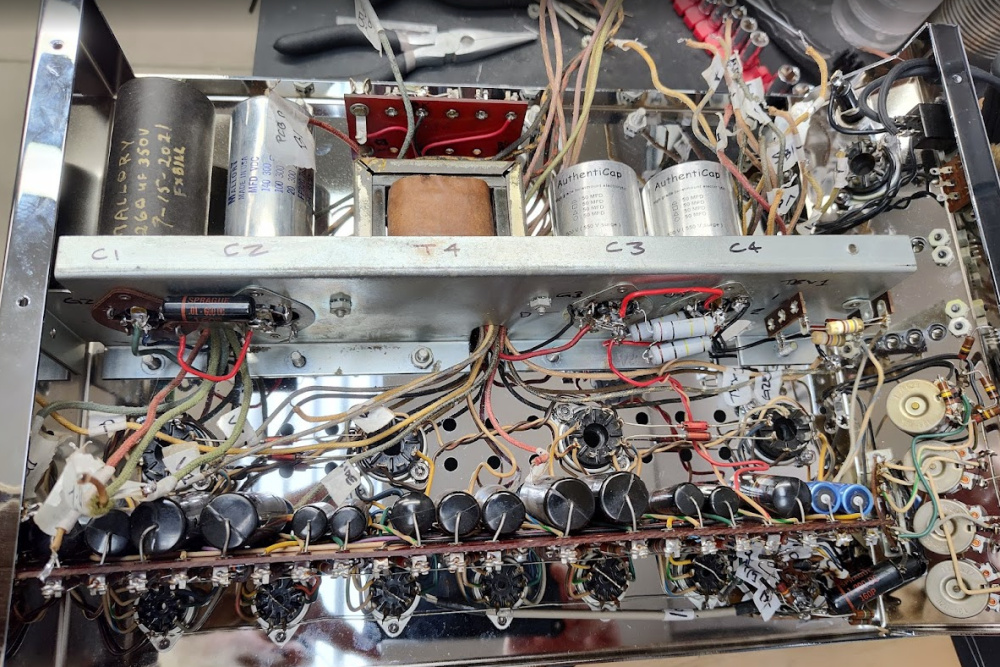
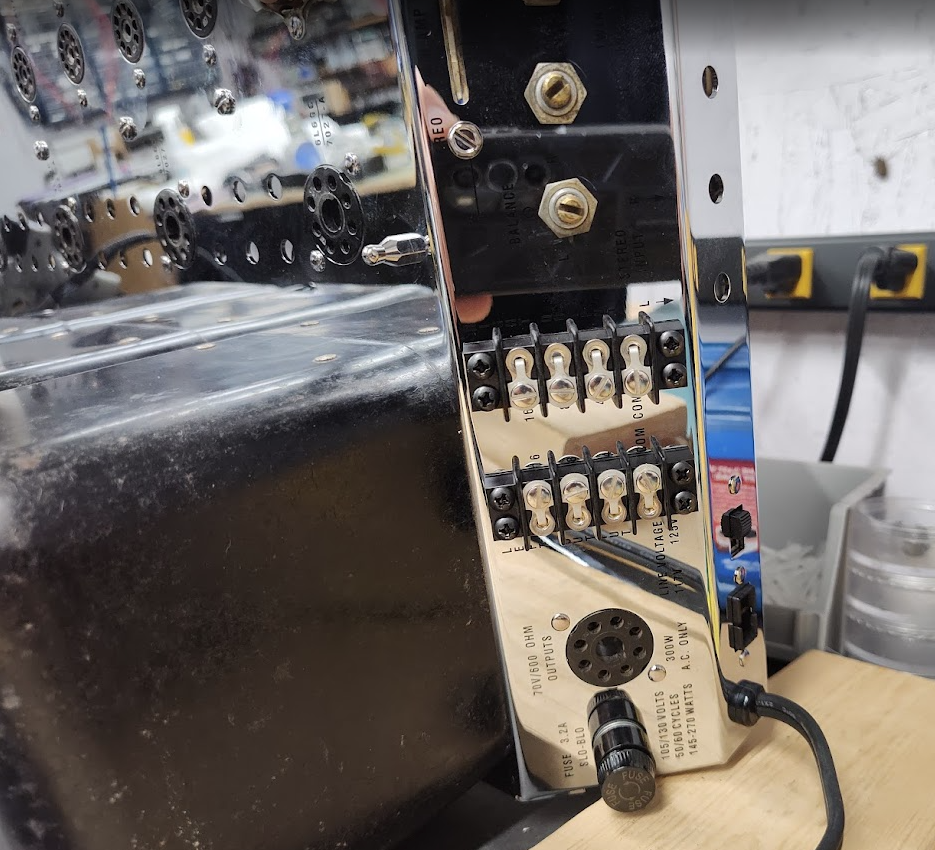
Almost done. New power cord, new fuse holder, and I had to wait for the new RCA jacks because the stock were pressed into the chassis and they ain't comin out.
New Speaker Blocks as well:
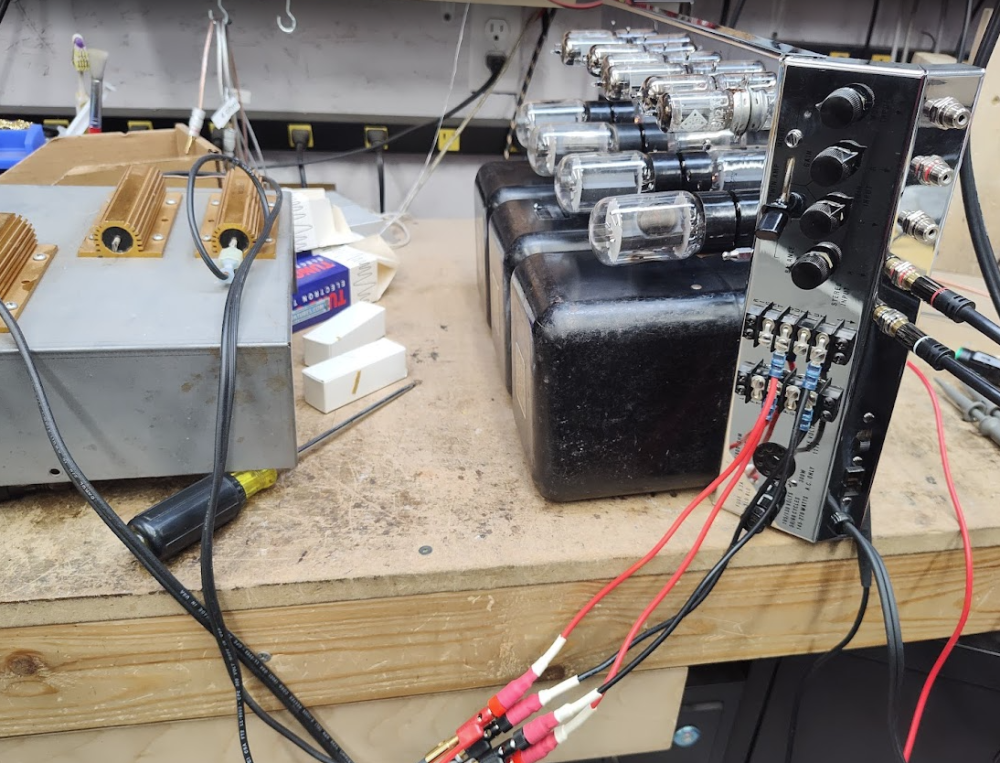
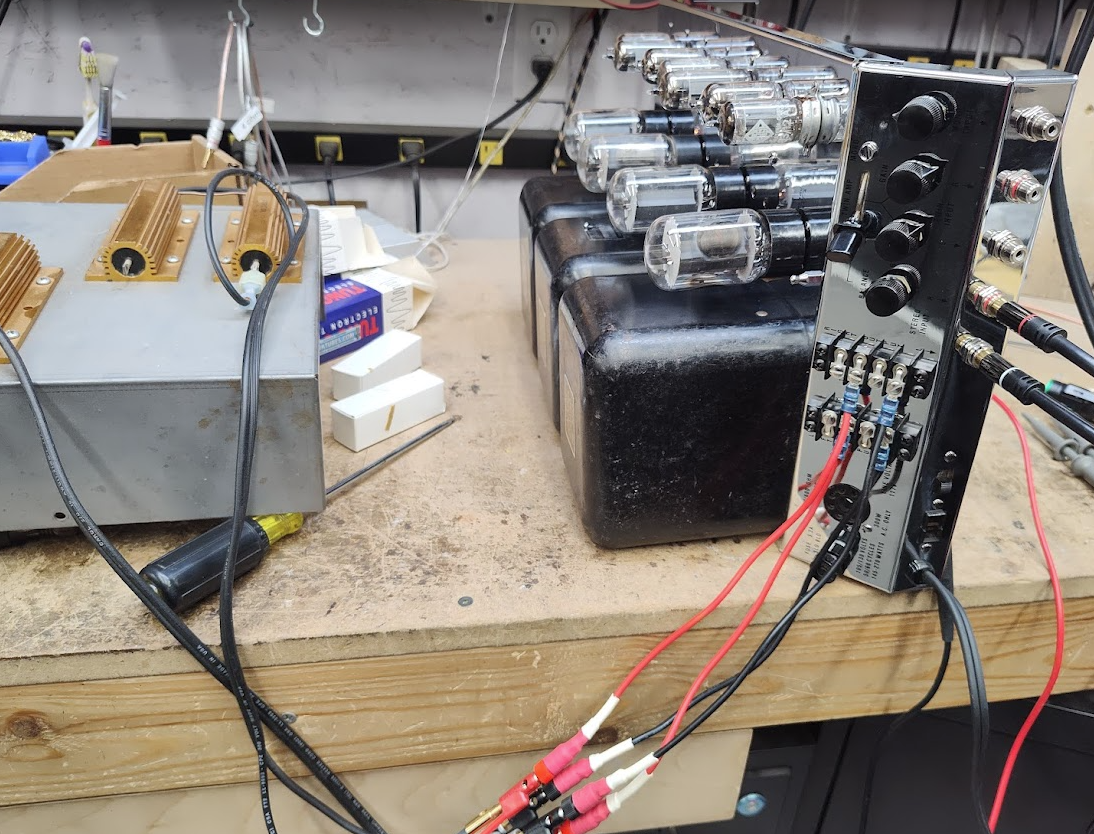
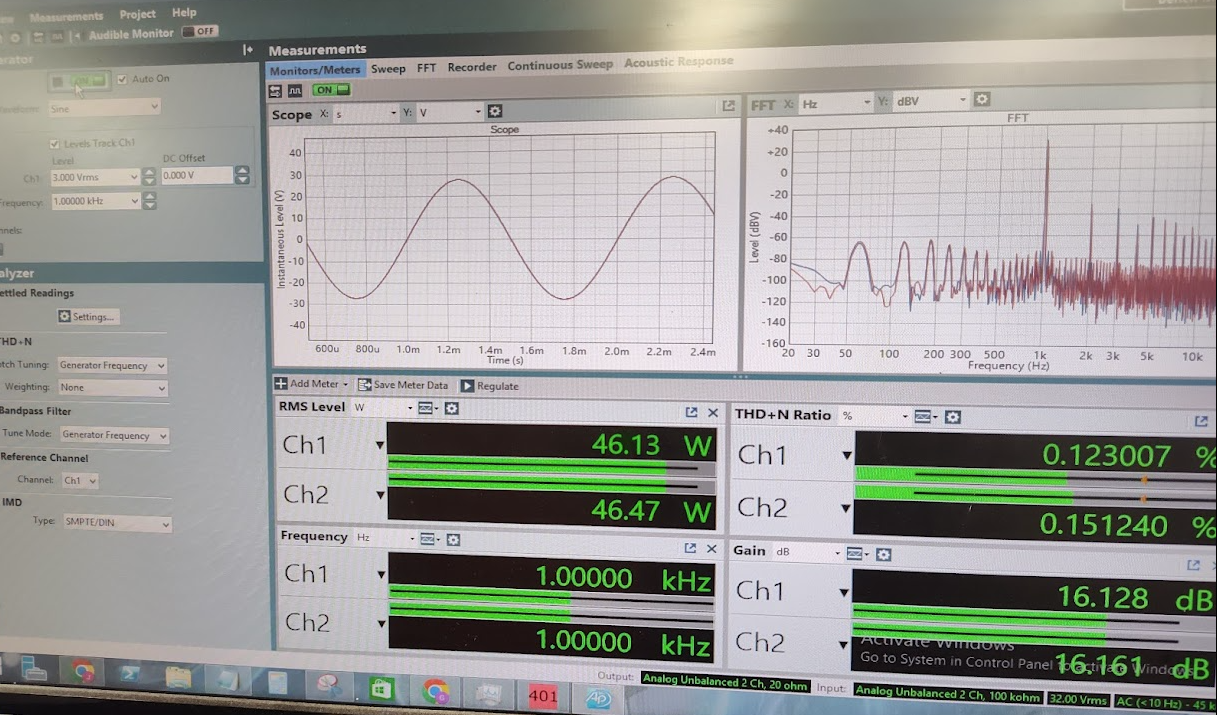
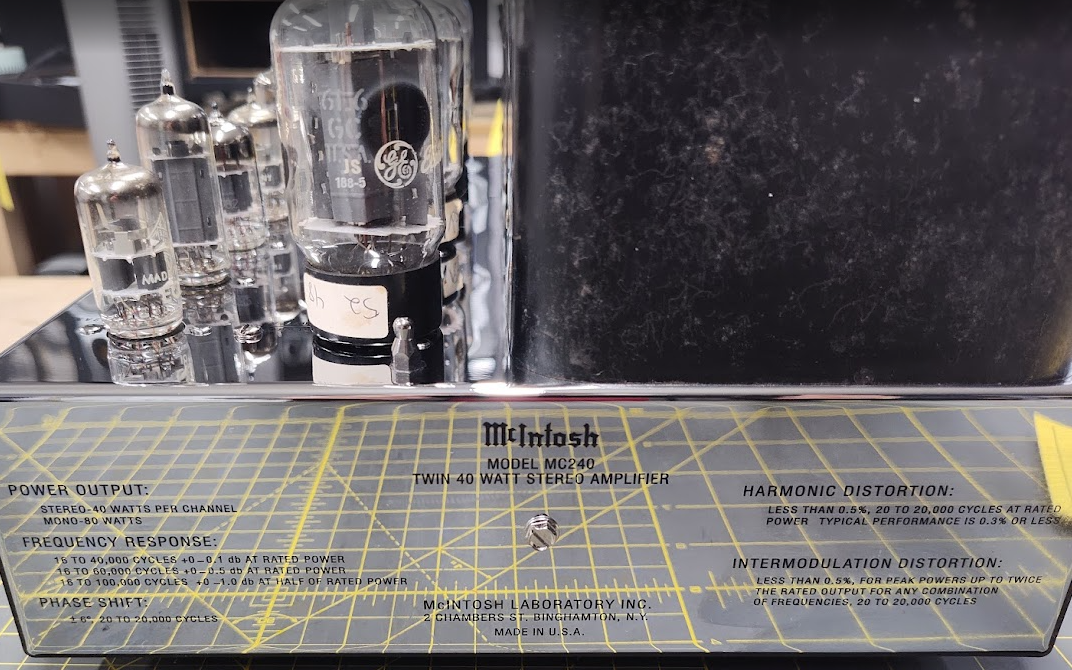
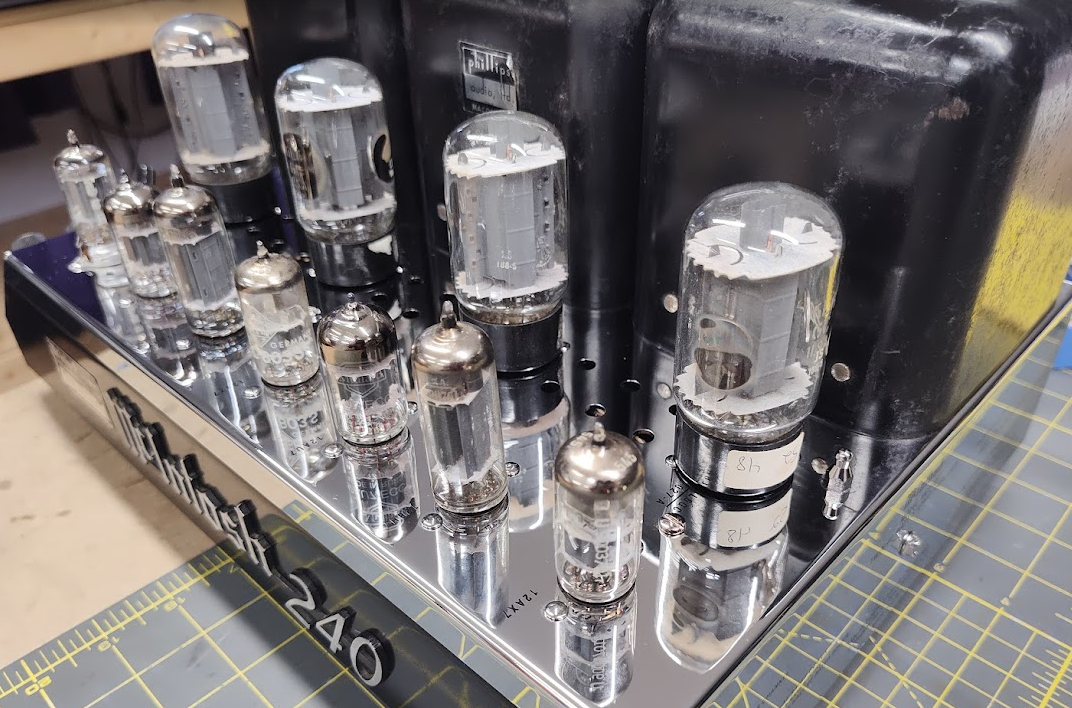
Tubes in, and initial testing. It only has 16dB gain and a max power of 40W per channel, so I was quite shocked at how much metal it takes to make that happen - lol
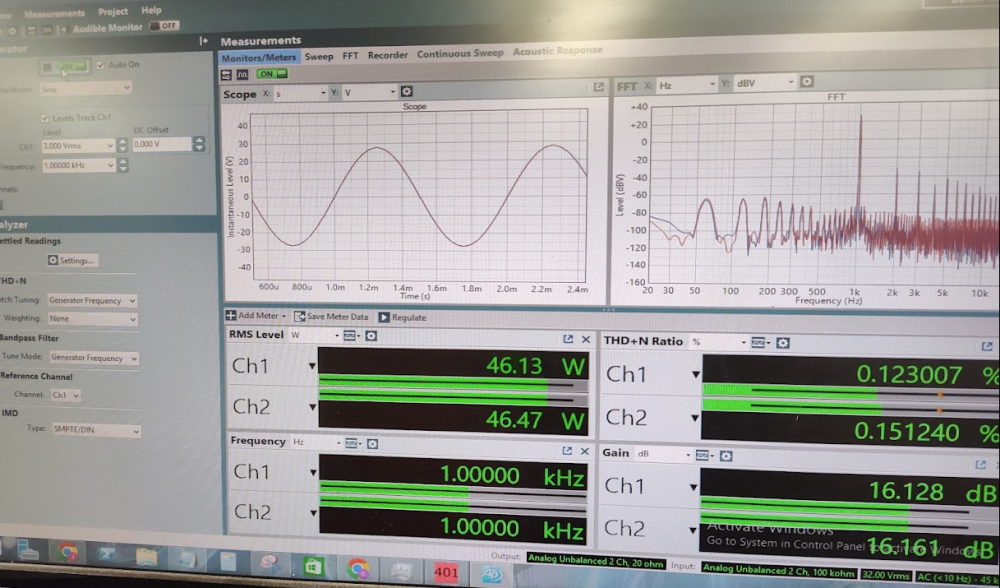
Test result after some tweaking. Spec is 0.5%, and it stays below 0.2% from 1W to 45W so we're good. I can make the THD change based on were I put the 6L6 output tubes, so matching is a factor on this topology.
Some cutesy pics:
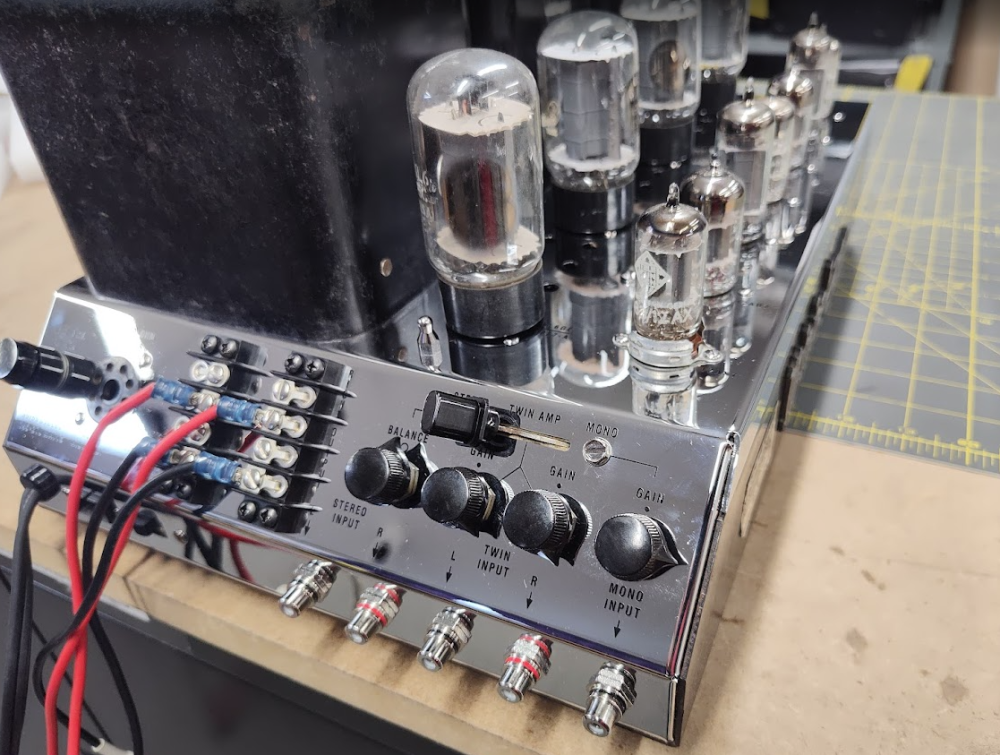
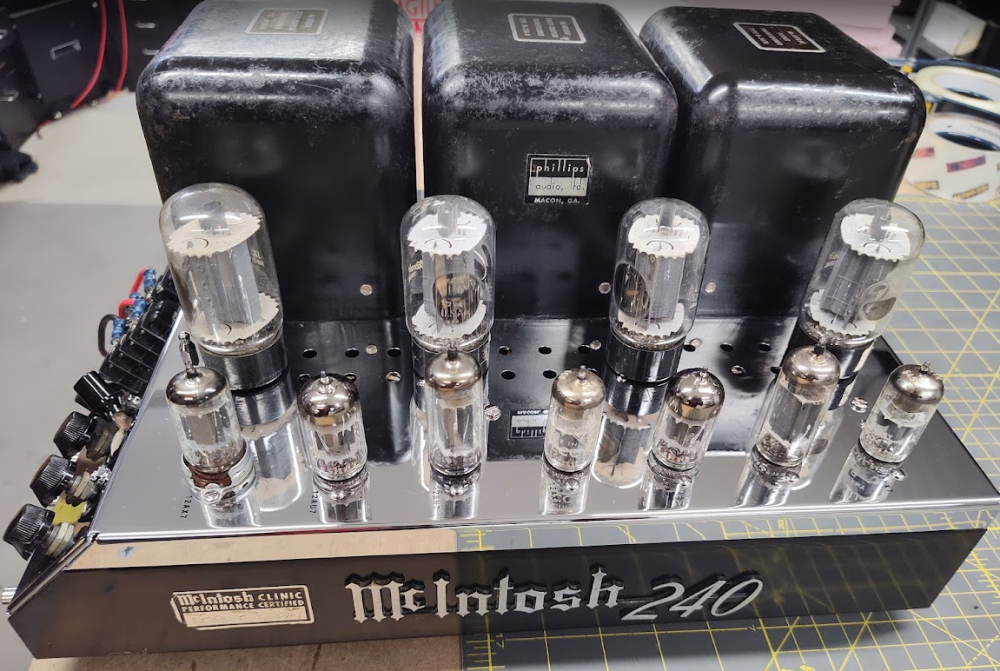
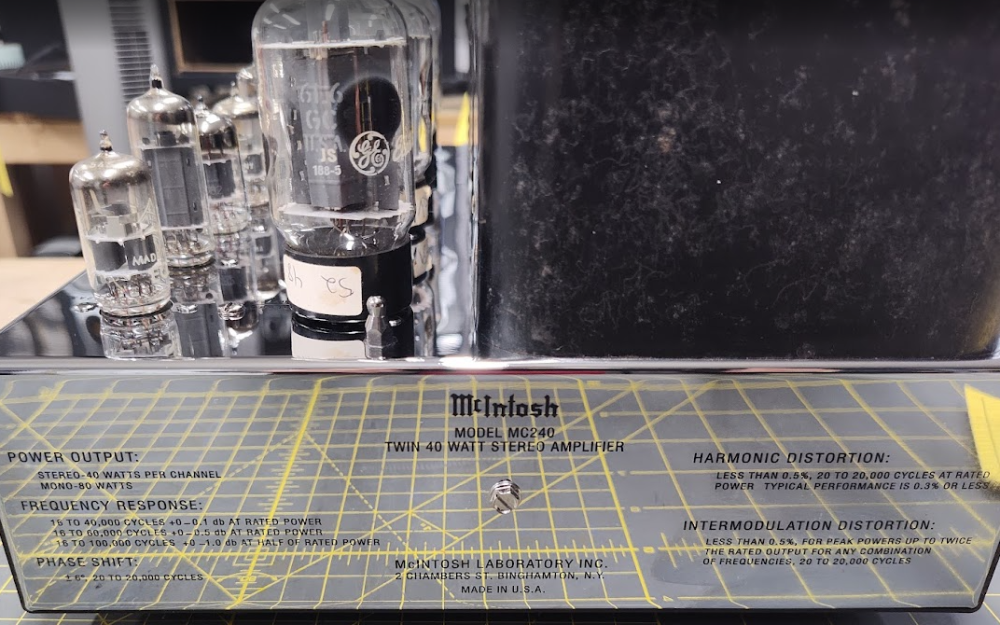
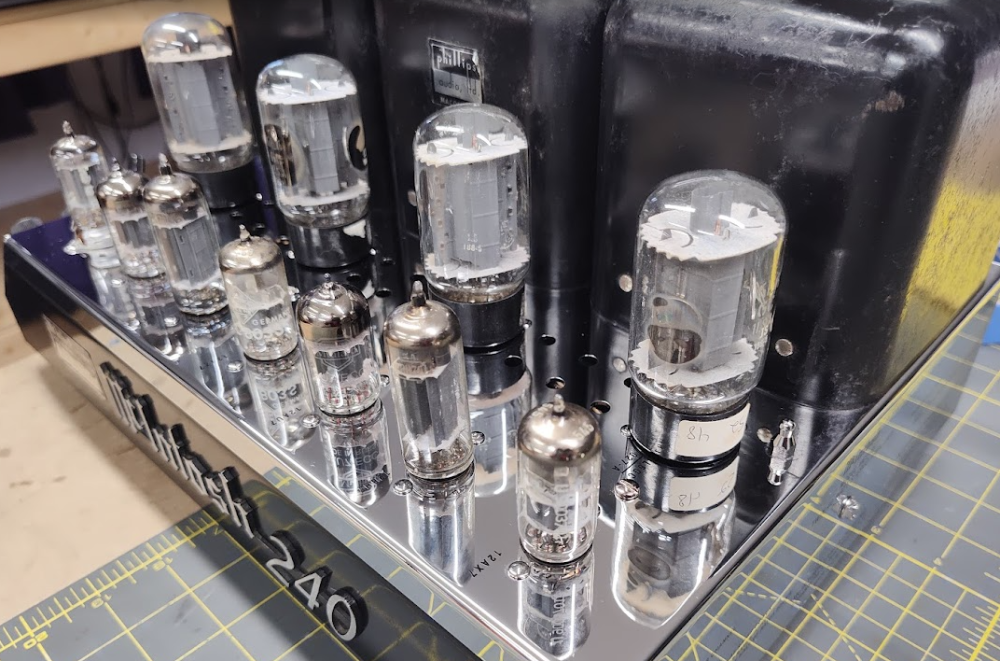
I can look back on it now and call it fun...
But it wasn't. HAHAHAHA!
-
2
-
1
-
-
10 hours ago, Charlie said:
NASA needs to be reformed:
Fischer-Tropsch Type (FTT) Reactions: This is the primary non-biological pathway. In hydrothermal systems or within the Earth's mantle, inorganic carbon (like
CO2) can react with hydrogen (H2) in the presence of metallic catalysts (like nickel or iron) to create linear alkanes, including long-chain molecules.
Serpentinization: This geological water-rock process releases hydrogen, which drives the FTT reactions described above.
Laboratory Synthesis: Studies have successfully synthesized heavy hydrocarbons, including those in the range of decane (C10) and even higher (up to
C24), by simulating hydrothermal conditions or mantle environments using inorganic starting materials.
Extraterrestrial Processes: Long-chain alkanes have been detected in meteorites and on Titan (a moon of Saturn), proving they form in environments that have never contained life.-
1
-
-
Miles Davis - SO WHAT
-
4
-
-
Yeah that must be it.
-
1
-
-
Billy Joel - Uptown Girl
@1:27 Brilliant bridge. What a legend.
-
4
-
-
Just one fluke of many...thousands of 'chances' hitting the jackpot actually.
I mean, just because you have the right chemicals doesn't even suggest, on a chemical level, that life will emerge. They still have NO IDEA how life started. All this talk about the Miller-Urey experiment and hydrothermal vents and the 'primordial soup pond' are all known to be totally impossible in practice to produce life. The process of going from chemicals to biology is way, way outside our understanding.
They do not understand at all how homo-chiral amino acids formed into proteins...so complex they can only be assembled by code in a DNA molecule...a process by which must be protected from the environment inside a cell membrane...so DNA/RNA had to come first. But only proteins can make them...
Bet you never heard that all amino acids and polysaccarides exist in racemic mixtures (in nature, it's easy to expect racemic mixtures because this is what is produced 100% of the time in a lab unless strictly controlled by process) but life ONLY USES homo-chiral types. This is a ridiculously improbable 'chance'. It's not that life prefers it this way...it won't work any other way! So you can't just have amino acids. You can only have chiral amino acids, and those amino can't be allowed to bind any way they want...they must bind in a specific way or you'll get useless sludge right away.
It's way too complicated. They try to make up simpler scenarios like the 'RNA' world but it doesn't stand under the gentlest of scrutiny.
A simplified structure of an RNA-polymerase molecule. This is literally a machine made out of atoms...(about 30,000 to 50,000 atoms arraigned exactly right in chemical and non-chemical (spatial) bonds):

-
1
-
-
Gotta love all those mental invasive species that plant weeds in our minds.
-
1
-
-
Tests great too!
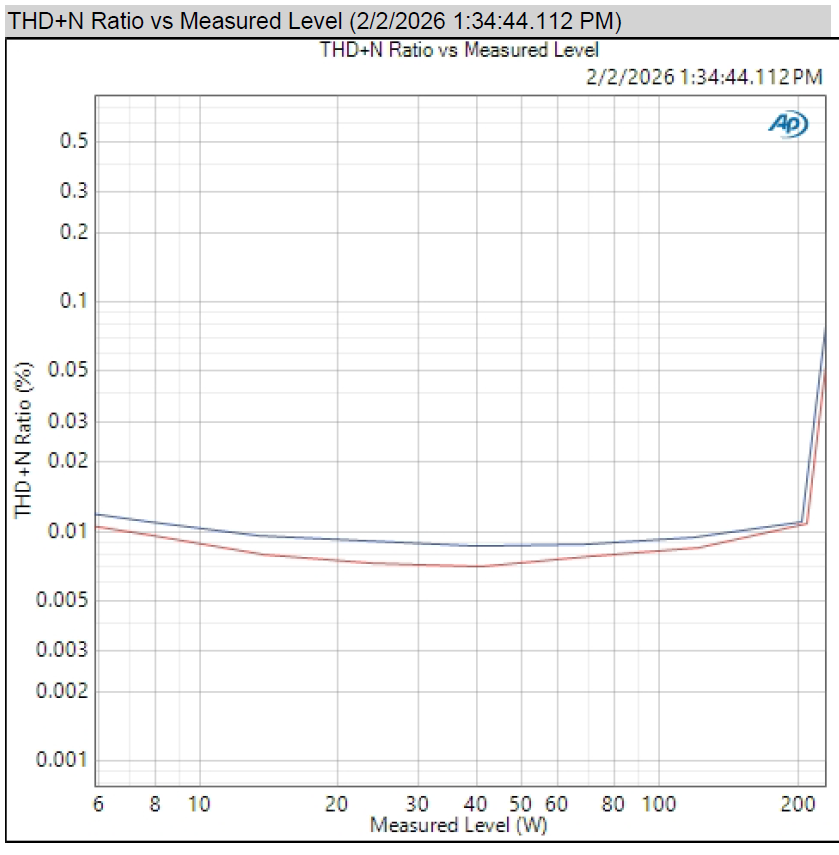
-
1
-
1
-
-
C-16 (this was torture!)
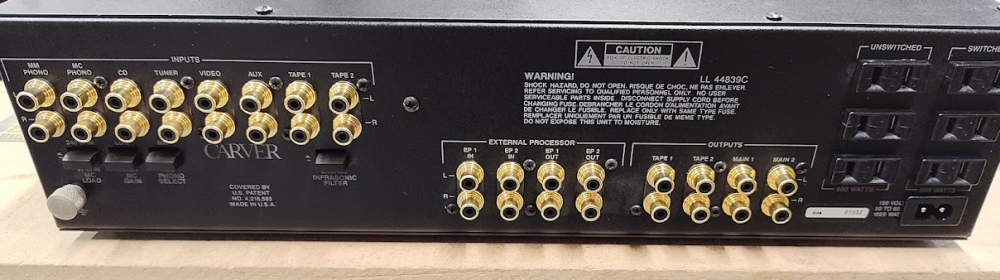
-
2
-
-
Bad bad bad!
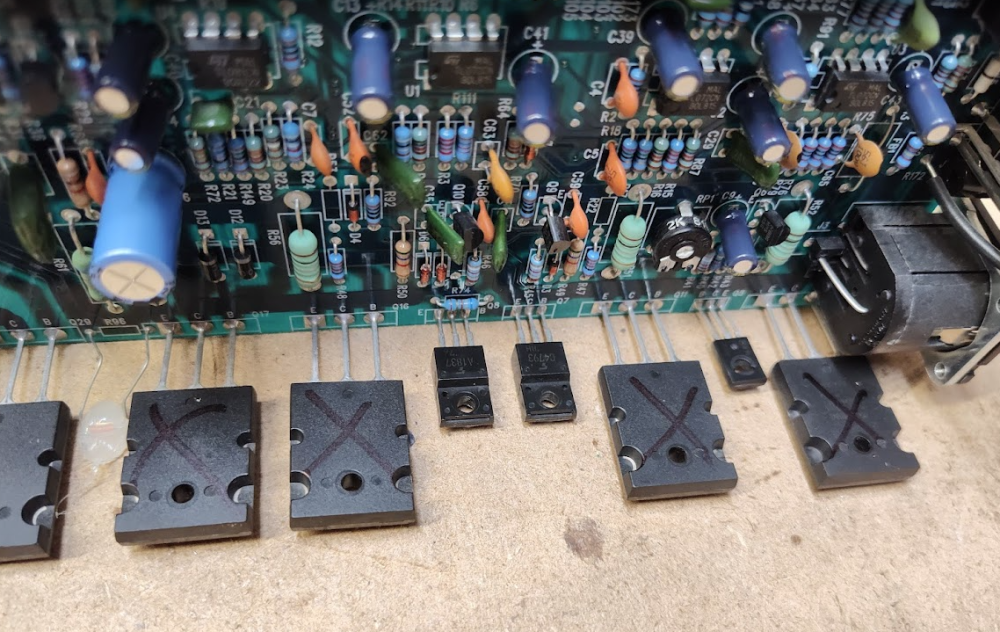
Thankfully, only a fuse and a pair if output transistors are bad. I replaced the whole stage though.
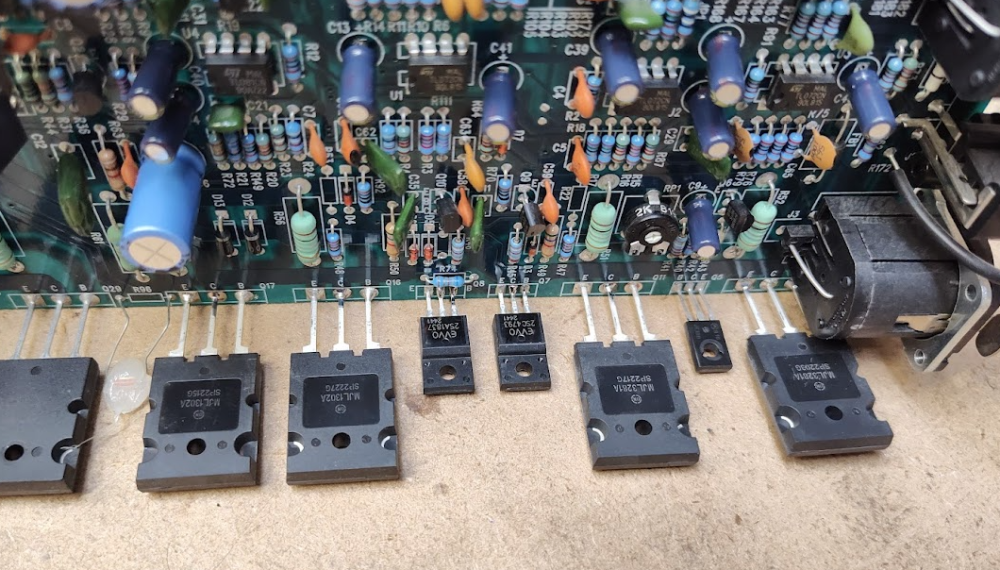
All back together!
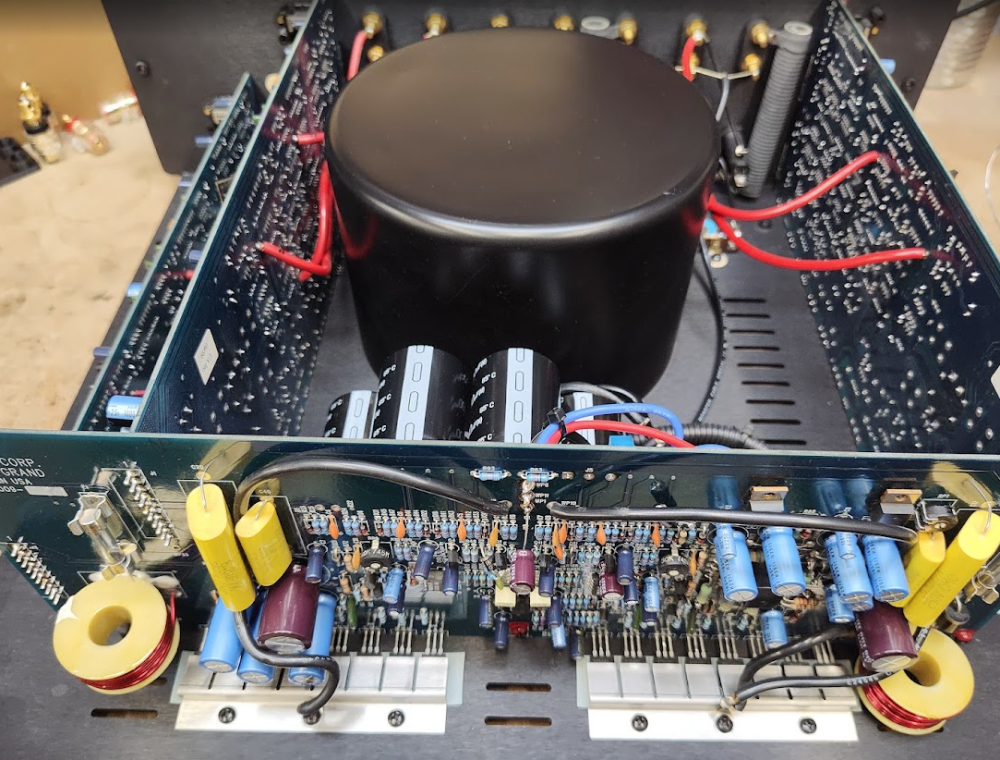
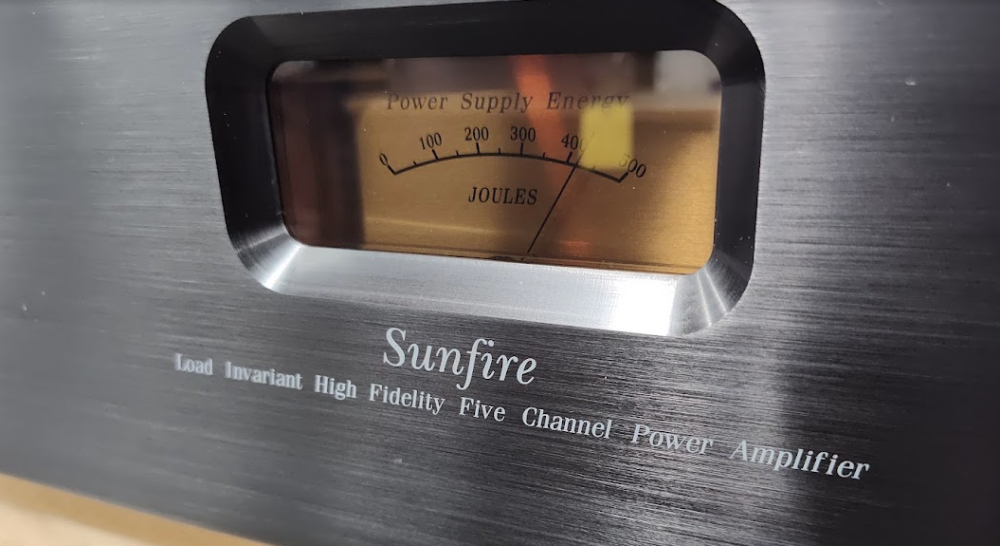
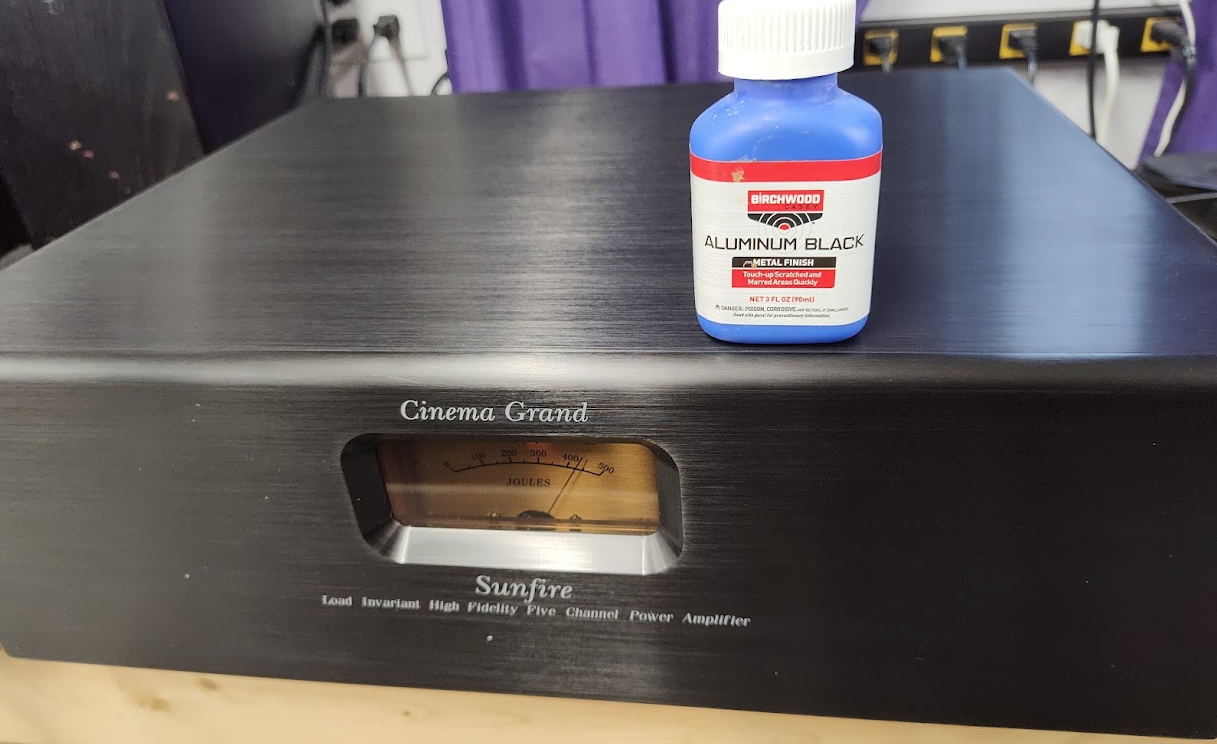
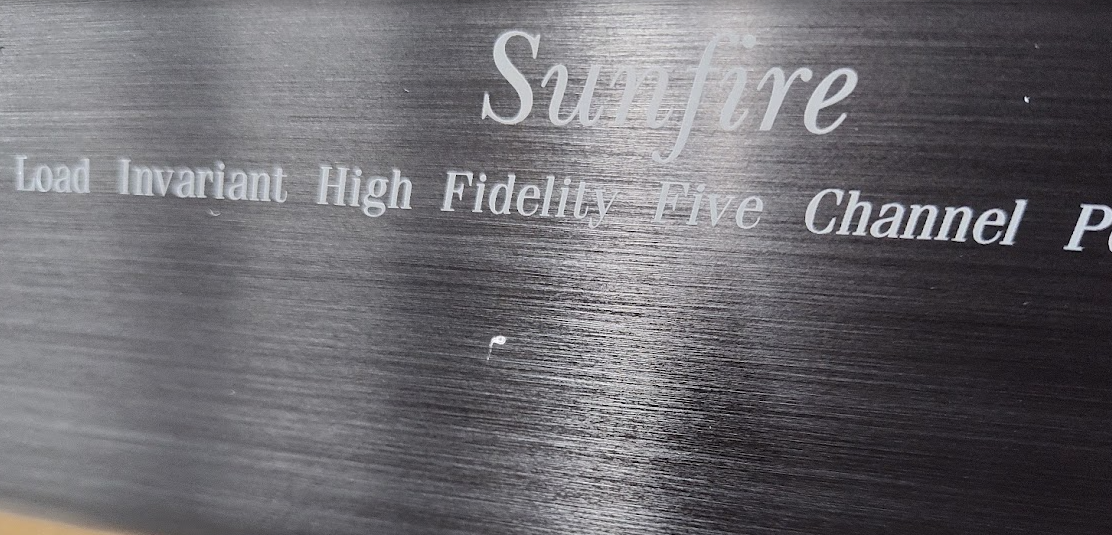
New meter bulb and meter check, the cover is back on, and now a bit of faceplate cleanup

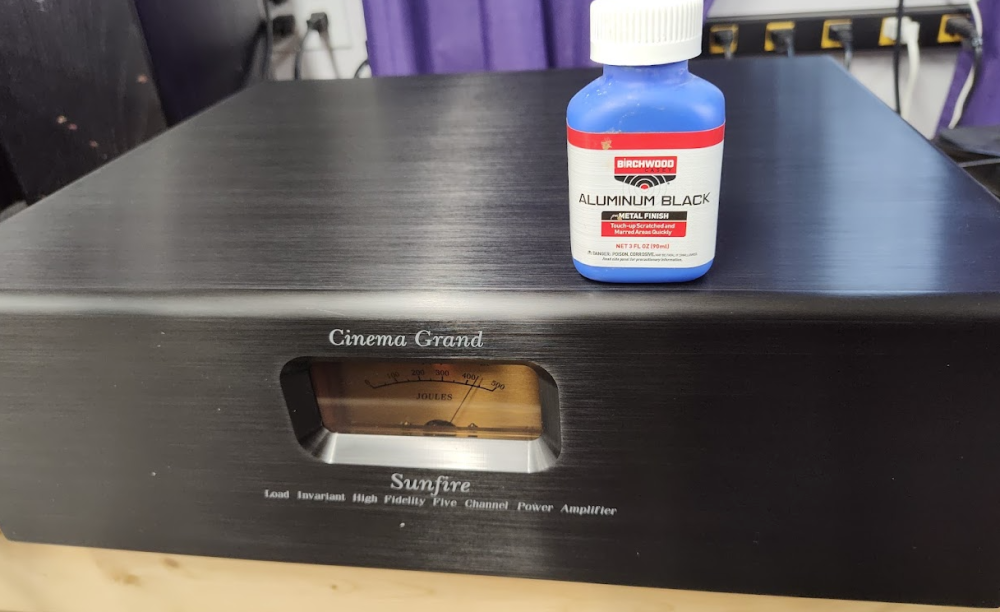
Before:

After:
-
1
-
-
19 hours ago, AndrewJohn said:
just curious, is there a typical reason for this common failure? Any prevention possible? Or does it fall into the two buckets of a) user abuse and/or b) aging or low-quality original components?
Thanks for sharing this project. Looking forward to watching the whole thing!
Not really typical. They fail as a result of a few things like a failed TDC, bad regulation (bad caps), cracked solder joints, abuse, etc. The problem is that Sunfires don't shut down from a fault - they just mute. So power stays active during a failure until it becomes a light show. The fuses rarely save the day...they only prevent complete meltdown (hopefully).
-
2
-
1
-
-
Yeah - 20 hours is at the low end of time. I will not make any money on this.
I have bills like anyone else - it's not about making money, it's about being responsible with it. I have to be very careful what work I take. If a project gets too demanding of my attention, other clients suffer. And I certainly do not want a shop full of unfinished projects that are over a year or two old. I told myself I would not do that...
Anyway, fxbill is a great salesman. Looks like I'm doing it.
For team Carversite...here we go...
-
2
-
-
Correction - FxBill worked on it and he says it works...so...that is a bonus!
-
I may or may not do this...I'm having second thoughts.
'The guts just come out and go right into the new chassis...'
Ha!!!!!

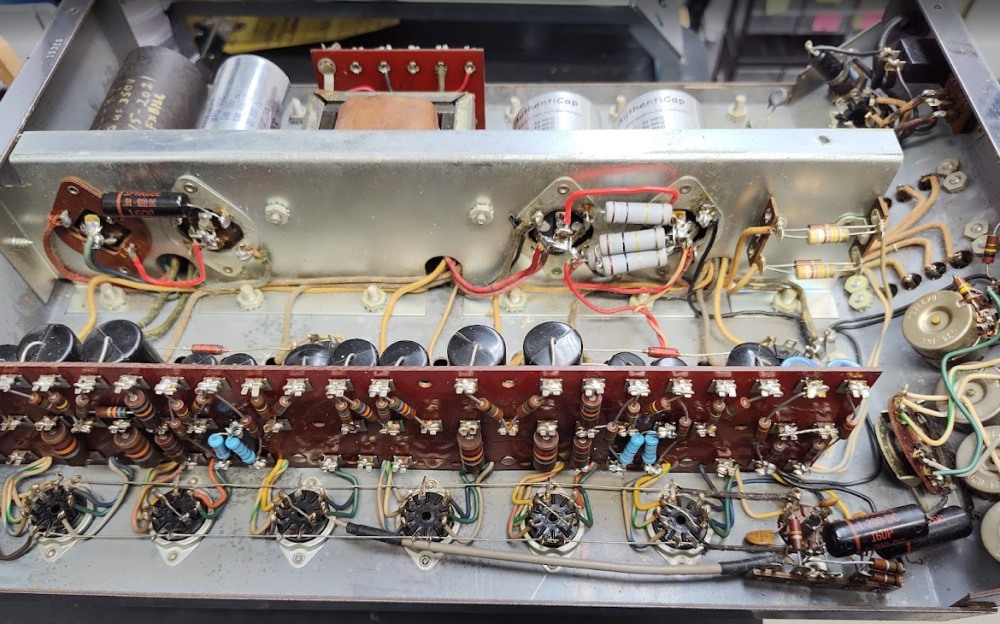
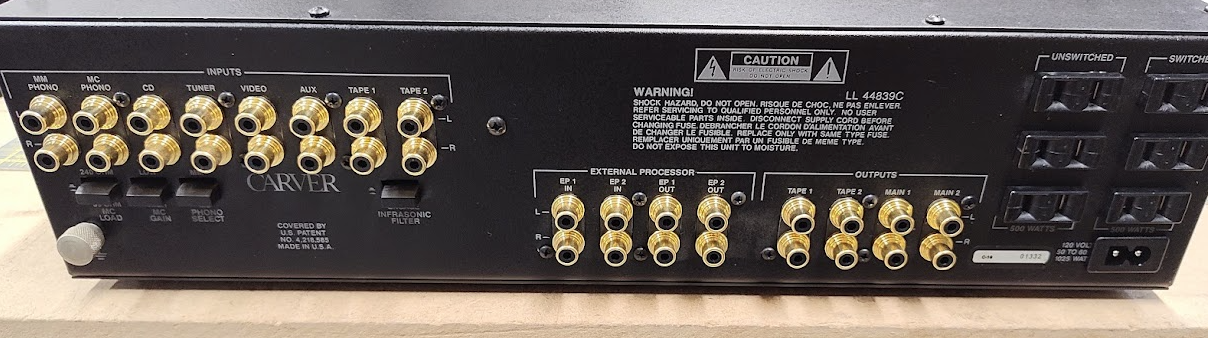
It wouldn't be too bad if the transformers could just 'unplug' but they don't. Their wires travel everywhere...and that's real problem. There's no room for error - the wire lengths are precise. 3 transformers - each with 8 to 20 wires. All rivets have to be drilled out. All RCA jacks need to be replaced. The thing needs a severe cleaning and polishing. And the worst part - HUMAN HANDS.
Previously worked on and it doesn't work. Worst problem ever.
I'll need encouragement because I really want to say NO.
-
 1
1
-
 1
1
-
 2
2
-
-
Tearing it down:
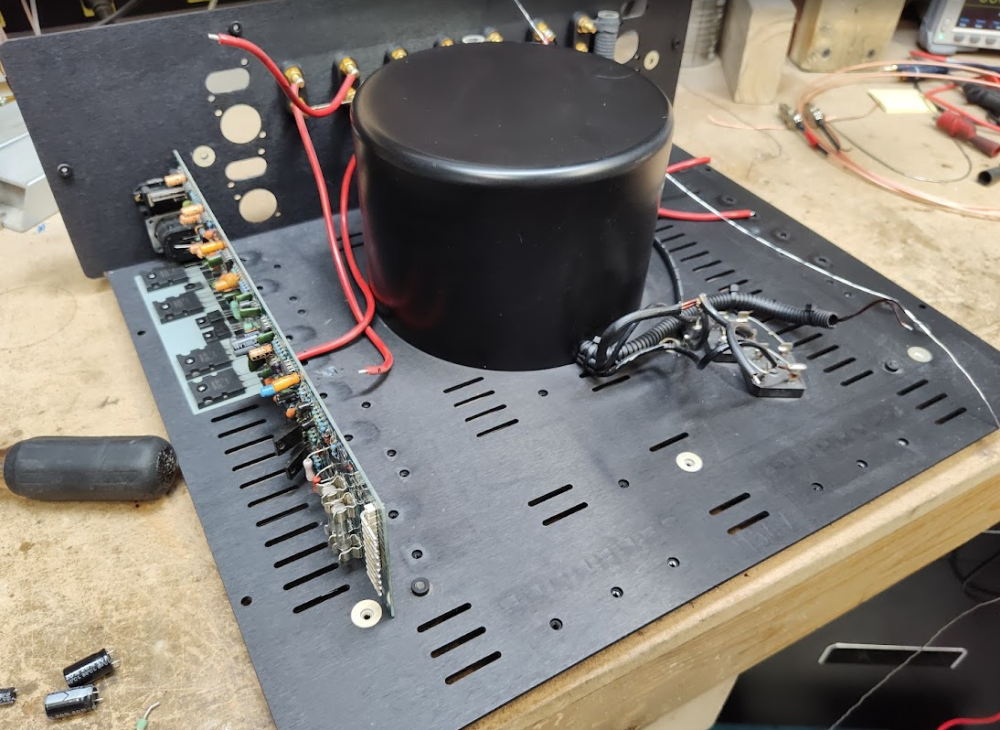
And of course it has a blown channel...it's rare to work on a CG and it NOT have a blown channel.
-
2
-
1
-
2
-
-
On 1/23/2026 at 12:15 PM, Benjaminsswanson said:
Nice! I have a DH500 and the RCA inputs are deteriorating on the inside. Occasionally I have to mess with the cables. I think as stage 1, I will give the insides a bit a of a clean and replace the RCA jacks. Which RCA jacks did you use for this one and did you have to open up the holes in the chassis at all? Thanks in advance.
Grace and peace,
Ben
I use these:
https://www.mouser.com/ProductDetail/REAN/NYS367-0?qs=R5cXQUTKuHU8XkQYanQZXg%3D%3D
The number after the dash selects the color. The above is black.
-
5 hours ago, Rob said:
I like both of those. Wonder if Bob would allow a photo of him somewhere in there?
With a knife...
-
 3
3
-
-
Yeah...I find it interesting the modern mind imposes upon the universe a modern image.
We love computers so the universe must be a computer (Alex Tegmark, Steven Wolfram, etc).
-
1
-
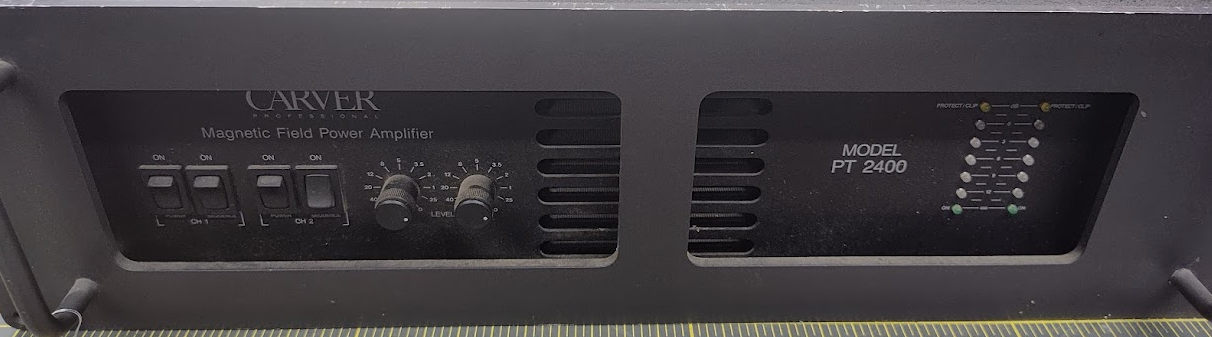
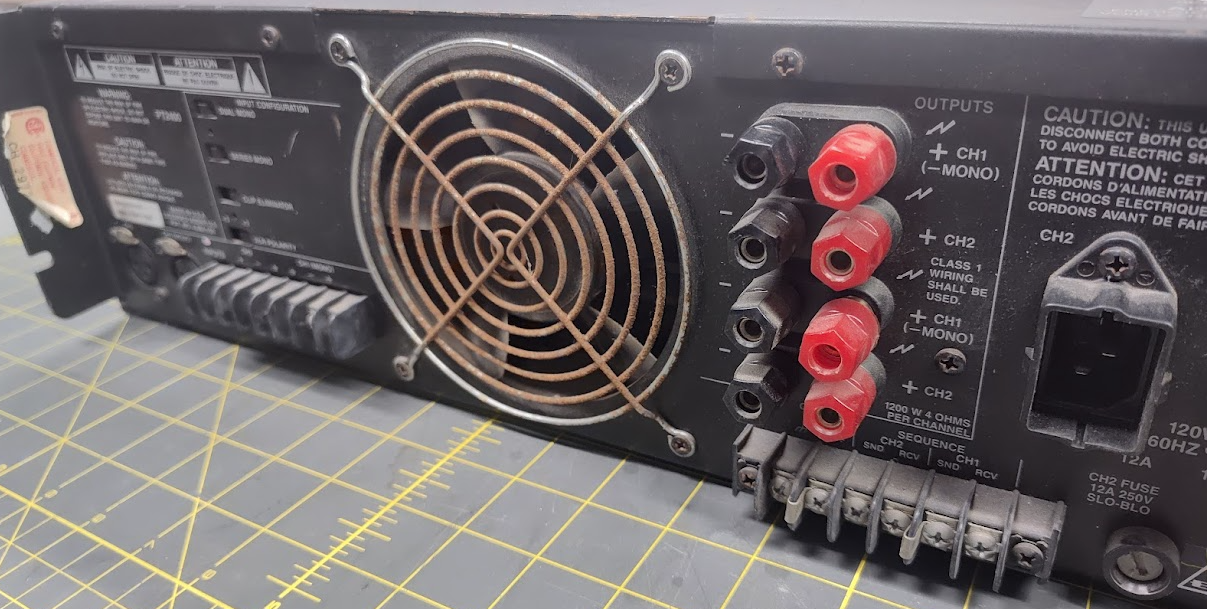
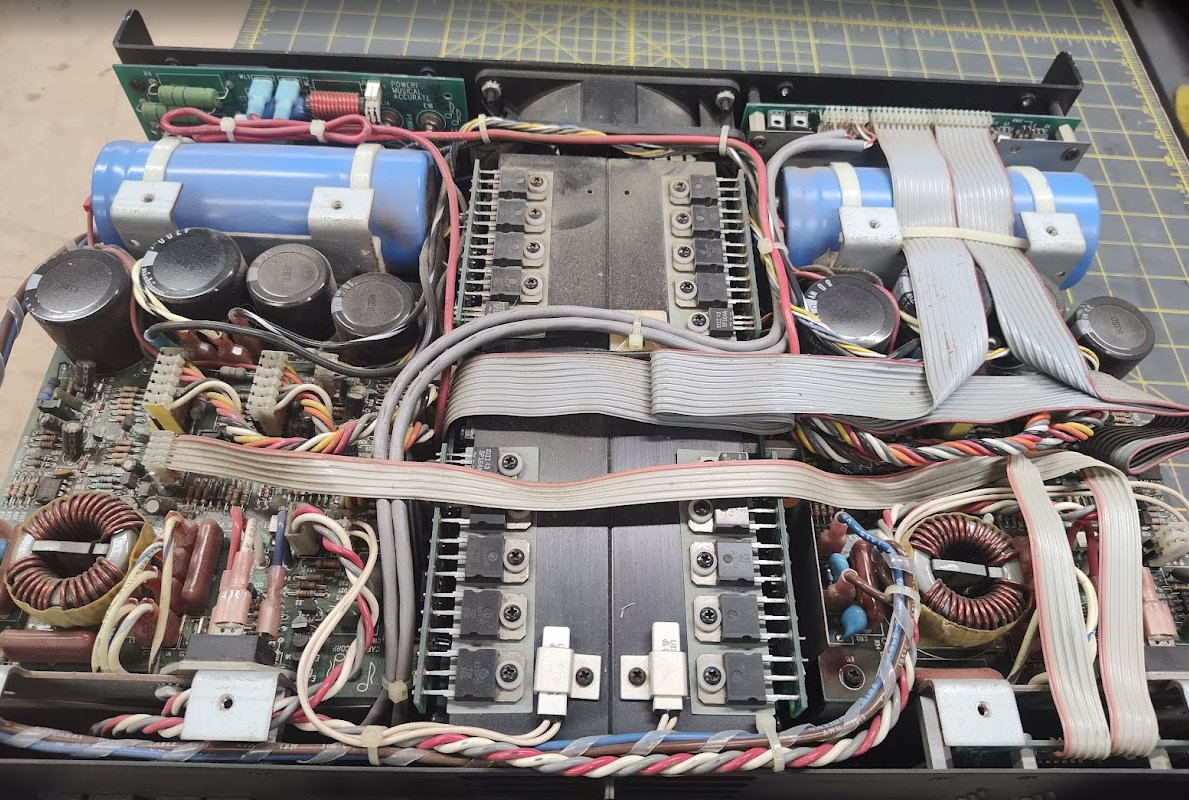






Old Newbie Mr.M-500t
in The Welcome Shop (Please read first)
Posted
I can change the email address on your old account - it's still in the database.
Just PM me and I'll get it set up for you.