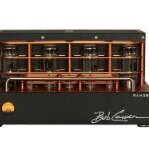
Ar9Jim 6,570 Posted December 20, 2022 Posted December 20, 2022 (edited) Bob Carver has been advising people to plug his amplifiers directly to the wall and using the cord in the box is fine. Bobs large amplifiers make use of all the power available from the outlet at times and the dynamics can sag the home circuits power, as most of us have witnessed by the dimming of the house lights during high current demands. Bobs tube amp designs at any wattage rating, like the Black Magic 25 for instance, while its RMS power is conservatively rated, its dynamic power is much greater. In spite of having a 3 amp fuse, it will sag the voltage on a 15-20 amp circuit. Vacuum tubes are voltage amplifiers (think high pressure), while not pulling enough enough current to blow the 3 amp fuse, the voltage will sag. The low impedance resistive load (aka drain test), critical of tube amps on the ASR site, are similar to testing a pressure washers ability to fill a swimming pool and claiming the pressure washer is deficient because it doesn't produce high enough current. The tube amps ability to swing high voltage, in response to impedance increases over a loudspeakers impedance curve is what makes tube amps special. Many things ASR gets right, and I find agreement with their test and what Bob has said for decades on power products. These topics are in agreement, and Bob told us these things long before ASR existed. Bob Carver is science based. His genius will become even more obvious with time. " Plug the amp directly to the outlet, those devices can not help, but they may hurt." "Use the cord in the box, its fine." "A well designed power supply supplies perfect power to the amplifier." Bob. Personally, I use a conditioner on front end components. Not with Carver amplifiers of any type. 2022 is catching up to what Bob told us long ago. Edited December 20, 2022 by Ar9Jim 2
Ar9Jim 6,570 Posted December 20, 2022 Author Posted December 20, 2022 (edited) I copied this from a tube amp site. Sums up the differences in amp types very well. Voltage (tube) vs current (solid state). This explains Bob testing and measuring tube amp performance while driving actual dynamic speaker loads during development. The whole tube or solid-state dilemma is somewhat of a misnomer. Once you accept the reality that a tube amp and a solid-state amp are very different in how they operate, you’ll perhaps better understand that each have their own traits. The biggest difference between them is that a solid-state amp is driven by current throughout the output devices and a tube is driven by voltage. Voltage alone can’t drive a speaker, hence the reason for needing output transformers. You’ll notice most stereo tube amps have 3 large, heavy objects, typically at the rear. They are a power transformer and two output transformers (one for each channel) that convert the voltage from the output tubes to current at the speaker posts. A solid-state amp typically has a single power transformer and no output transformers. However, a solid-state output transistor and a tube basically do the same thing. One doing it in silicone with current and the other doing it in a glass vacuum with voltage. Do they sound different? Yes, we believe so. However, some tube companies make their tube amps sound more solid-state like (for power) and some solid-state products can sound very tube-like. A key difference is that a tube product will require a small amount of upkeep and maintenance. For most who desire the benefit of tubes, it’s a small price to pay. Others just don’t want to maintain an amp once installed. Back to the sound. First, let’s squelch the myth that tube amps don’t have strong or controlled bass. Today, that couldn’t be further from the truth. Let’s also put to bed that solid-state amps aren’t smooth. Like any product from any manufacturer, all products have a voicing and color which is why you buy any given product. There are benefits and drawbacks to each, but one must weigh each depending on what you are looking to achieve in your audio system both in terms of sonics and upkeep as well as taking the rest of the system into consideration. So, in doing so, what are the benefits of each? Generally speaking, tubes offer a greater sense of bloom, more texture and realism to vocals and instruments, a richer midrange. Solid-state usually offers more watts per dollar, faster sound, greater detail. Once again these are generalizations. If you have a system that overall is a bit harsh or fatiguing, chances are you could greatly benefit from a tube amp. On the other hand, if your system is flat, sluggish, or too soft sounding, perhaps a quality solid-state amp is the way to go. Other factors of particular importance are speaker load. Some speakers (although few today) require lots of power and very low impedance driving capabilities. In that scenario, a solid-state amp may do better. But, if your speakers have a moderate impedance curve and are of average efficiency, a tube amp can redefine your definition of what a great audio system can sound like. Edited December 20, 2022 by Ar9Jim 4
Ar9Jim 6,570 Posted December 21, 2022 Author Posted December 21, 2022 (edited) One time when discussing the power conditioner and power cord topic with Bob, he mentioned being trained as a physicist. "My views on these subjects are filtered through my physics education." "Some in the industry are promoting improvements with no basis in science." Its interesting how close ASRs measurements and their testing, align with what Bob has been teaching for decades, before the public had free access to test equipment like today. Back at the time when print magazine advertising propaganda was the norm. Today, these devices have their own category of the market. Can there be differences? Yes. Are those differences technical improvements in performance. Not really. Bobs saying, "aerospace grade audio" means science based. Unfortunately science and "audio grade" have an increasingly large disconnect. ASR does a good service revealing those embarrassments to the hobby. The players can't possibly say this science is not well understood, while using a cell phone. I don't agree with ASR testing dynamic voltage amplifiers with resistor drain test, but on many topics, Bobs teachings and ASRs findings agree very well. Edited December 21, 2022 by Ar9Jim 3
Ar9Jim 6,570 Posted December 21, 2022 Author Posted December 21, 2022 (edited) If you have a Bob Carver amp either solid state or vacuum tube amplifier plugged into a conditioner, regenerator or filter of any type, try the amp plugged direct to the wall. I know the unit may have outlets marked '15 amps', or 'high current' especially for amplifiers vs the other outlets on the device, and a Black Magic 25 or 275 only have a 3 amp fuse, so the device appears more than adequate but like Bob says, "They can not help and may hurt." If you need more outlets or an extension cord, use a high quality power strip or extension cord, like those intended for power tools. Avoid power strips with surge protectors or circuit breakers. Bob explaining the light weight of his vintage amplifier designs, by explaining that, "I'm using the big transformer on the utility pole" is as true today as ever, even with tube gear and voltage demand. The most direct route to the utility companies transformer is best. Edited December 21, 2022 by Ar9Jim 4
ChrisTFM35 674 Posted December 21, 2022 Posted December 21, 2022 Very interesting. Thanks for this information.
Ar9Jim 6,570 Posted January 14, 2023 Author Posted January 14, 2023 (edited) Why isn't perfect, low distortion, low impedance, regenerated AC power important to your audio gear? Because your audio gear runs on DC. The AC is rectified and filtered into DC before it is used by the audio component. The regenerated or any utility AC, is completely transformed and filtered to DC. This is another audio grade science solution, creating a problem looking for a solution. "Plug into the wall, those devices can not help, but they may hurt." Bob Carver over decades. What about the claims to lower Impedance? "The power supply capacitors lower impedance." Here is one. Do the measurements improve or do they get worse? Tested 2022. Edited January 14, 2023 by Ar9Jim 2
4krow 7,752 Posted January 14, 2023 Posted January 14, 2023 After a few minutes, I totally get the point about these new PS Audio products. I still cling to the idea of the original product which was in fact a regenerator. Not efficient, true that, but very effective. A bit later I bought the new model which was sooo much more efficient, and a total PITA! Had to send it back to PS Audio for instability reasons. I won't even go into al of the crap that this unit produced, even when in the middle of the night, would come on all by itself, etc. Done baby done. I have owned other older PSA products and the only one that I would keep is the original P300, which regenerates, produces multi-waveforms if you want, and supplies balanced power. There, end of story for me. It seemed that every single product after that sucked in one way or another. FWIW, the P300 can be 'upgraded' with better caps and even power transistors if your into that sort of thing. What I saw as a downside though is that some power transformers don't like to be messed with, causing mechanical hum. Point well taken. Or I guess, use with caution. Because I love to mess around with power doesn't apply to most people. To me, the P300 is unequalled, but not for everybody. Done. 1
Ar9Jim 6,570 Posted January 18, 2023 Author Posted January 18, 2023 (edited) On 1/14/2023 at 12:07 PM, 4krow said: After a few minutes, I totally get the point about these new PS Audio products. I still cling to the idea of the original product which was in fact a regenerator. Not efficient, true that, but very effective. A bit later I bought the new model which was sooo much more efficient, and a total PITA! Had to send it back to PS Audio for instability reasons. I won't even go into al of the crap that this unit produced, even when in the middle of the night, would come on all by itself, etc. Done baby done. I have owned other older PSA products and the only one that I would keep is the original P300, which regenerates, produces multi-waveforms if you want, and supplies balanced power. There, end of story for me. It seemed that every single product after that sucked in one way or another. FWIW, the P300 can be 'upgraded' with better caps and even power transistors if your into that sort of thing. What I saw as a downside though is that some power transformers don't like to be messed with, causing mechanical hum. Point well taken. Or I guess, use with caution. Because I love to mess around with power doesn't apply to most people. To me, the P300 is unequalled, but not for everybody. Done. I like PS and enjoy his videos. There was a point that things changed it seems. He use to recommend high quality cables that measure well, regardless of price. Later the products and cables with 'audio grade science', became part of the sales pitch and industry accepted morality. As much as Bob has used catchy names for his inventions, there has always been real science behind them. Bob will be more respected with time, as others fall into temptation, and the 'audio science' of marketing is proven junk, with increased ability of more people to measure in the Information Age . People can read whatever they wish to search for, good or bad, about any topic or product. You will never here anything not based in science from Bob, and some will be offended as always. All of these topics have just enough science to sound believable and get people to pay up. There are many Amirs and ASR's coming. I feel sorry for some of these audio companies in the near future. Its a real stretch for 'audio grade science' based companies to explain all these "unmeasurable" scientific qualities of audio, while using a cell phone. If the understanding was not complete at that level, surely your cell phone would not be feasible. Its just a thought. Edited January 18, 2023 by Ar9Jim 1
4krow 7,752 Posted January 18, 2023 Posted January 18, 2023 I rely on science as a start, and then listen with my being as an end result for what I prefer.
Kurt 3,409 Posted January 21, 2023 Posted January 21, 2023 I find that the sound I like is primarily dependent on the source recording and playback media. On the same system of turntable/preamp/amp/speakers some records sound terrific, some don't. I find some CD's to be harsh, some not. Yes, amp and speakers are the heart and soul... but, once past a certain performance level, it's all about the inputs, I feel. Having said all that, I do think there's a "matching" that I'd like to explore. Would tube amp or SS amp be better, generally, for listening to old records? Would a tube amp tame some of the harsh sounding early era CD's I have? I'd love to know if anyone has done any studies on the best system to match with the variety of music media that is out there.... 2
Ar9Jim 6,570 Posted January 22, 2023 Author Posted January 22, 2023 (edited) On 1/21/2023 at 9:58 AM, Kurt said: I find that the sound I like is primarily dependent on the source recording and playback media. On the same system of turntable/preamp/amp/speakers some records sound terrific, some don't. I find some CD's to be harsh, some not. Yes, amp and speakers are the heart and soul... but, once past a certain performance level, it's all about the inputs, I feel. Having said all that, I do think there's a "matching" that I'd like to explore. Would tube amp or SS amp be better, generally, for listening to old records? Would a tube amp tame some of the harsh sounding early era CD's I have? I'd love to know if anyone has done any studies on the best system to match with the variety of music media that is out there.... This is a pretty good generalization. I enjoy streaming and digital sources for the detail and convenience using a tube amp. Its the mix of digital sources and old school analog that can find a sweet spot for me. Some are just the opposite in mindset, preferring an analog source and solid state amps. Somewhere in the mix, many find their sweet spot. Jim TUBE and SS- The whole tube or solid-state dilemma is somewhat of a misnomer. Once you accept the reality that a tube amp and a solid-state amp are very different in how they operate, you’ll perhaps better understand that each have their own traits. The biggest difference between them is that a solid-state amp is driven by current throughout the output devices and a tube is driven by voltage. Voltage alone can’t drive a speaker, hence the reason for needing output transformers. You’ll notice most stereo tube amps have 3 large, heavy objects, typically at the rear. They are a power transformer and two output transformers (one for each channel) that convert the voltage from the output tubes to current at the speaker posts. A solid-state amp typically has a single power transformer and no output transformers. However, a solid-state output transistor and a tube basically do the same thing. One doing it in silicone with current and the other doing it in a glass vacuum with voltage. Do they sound different? Yes, we believe so. However, some tube companies make their tube amps sound more solid-state like (for power) and some solid-state products can sound very tube-like. A key difference is that a tube product will require a small amount of upkeep and maintenance. For most who desire the benefit of tubes, it’s a small price to pay. Others just don’t want to maintain an amp once installed. Back to the sound. First, let’s squelch the myth that tube amps don’t have strong or controlled bass. Today, that couldn’t be further from the truth. Let’s also put to bed that solid-state amps aren’t smooth. Like any product from any manufacturer, all products have a voicing and color which is why you buy any given product. There are benefits and drawbacks to each, but one must weigh each depending on what you are looking to achieve in your audio system both in terms of sonics and upkeep as well as taking the rest of the system into consideration. So, in doing so, what are the benefits of each? Generally speaking, tubes offer a greater sense of bloom, more texture and realism to vocals and instruments, a richer midrange. Solid-state usually offers more watts per dollar, faster sound, greater detail. Once again these are generalizations. If you have a system that overall is a bit harsh or fatiguing, chances are you could greatly benefit from a tube amp. On the other hand, if your system is flat, sluggish, or too soft sounding, perhaps a quality solid-state amp is the way to go. Other factors of particular importance are speaker load. Some speakers (although few today) require lots of power and very low impedance driving capabilities. In that scenario, a solid-state amp may do better. But, if your speakers have a moderate impedance curve and are of average efficiency, a tube amp can redefine your definition of what a great audio system can sound like. Edited January 22, 2023 by Ar9Jim 2
Kurt 3,409 Posted January 24, 2023 Posted January 24, 2023 On 1/22/2023 at 2:17 PM, Ar9Jim said: This is a pretty good generalization. I enjoy streaming and digital sources for the detail and convenience using a tube amp. Its the mix of digital sources and old school analog that can find a sweet spot for me. Some are just the opposite in mindset, preferring an analog source and solid state amps. Somewhere in the mix, many find their sweet spot. Jim TUBE and SS- The whole tube or solid-state dilemma is somewhat of a misnomer. Once you accept the reality that a tube amp and a solid-state amp are very different in how they operate, you’ll perhaps better understand that each have their own traits. The biggest difference between them is that a solid-state amp is driven by current throughout the output devices and a tube is driven by voltage. Voltage alone can’t drive a speaker, hence the reason for needing output transformers. You’ll notice most stereo tube amps have 3 large, heavy objects, typically at the rear. They are a power transformer and two output transformers (one for each channel) that convert the voltage from the output tubes to current at the speaker posts. A solid-state amp typically has a single power transformer and no output transformers. However, a solid-state output transistor and a tube basically do the same thing. One doing it in silicone with current and the other doing it in a glass vacuum with voltage. Do they sound different? Yes, we believe so. However, some tube companies make their tube amps sound more solid-state like (for power) and some solid-state products can sound very tube-like. A key difference is that a tube product will require a small amount of upkeep and maintenance. For most who desire the benefit of tubes, it’s a small price to pay. Others just don’t want to maintain an amp once installed. Back to the sound. First, let’s squelch the myth that tube amps don’t have strong or controlled bass. Today, that couldn’t be further from the truth. Let’s also put to bed that solid-state amps aren’t smooth. Like any product from any manufacturer, all products have a voicing and color which is why you buy any given product. There are benefits and drawbacks to each, but one must weigh each depending on what you are looking to achieve in your audio system both in terms of sonics and upkeep as well as taking the rest of the system into consideration. So, in doing so, what are the benefits of each? Generally speaking, tubes offer a greater sense of bloom, more texture and realism to vocals and instruments, a richer midrange. Solid-state usually offers more watts per dollar, faster sound, greater detail. Once again these are generalizations. If you have a system that overall is a bit harsh or fatiguing, chances are you could greatly benefit from a tube amp. On the other hand, if your system is flat, sluggish, or too soft sounding, perhaps a quality solid-state amp is the way to go. Other factors of particular importance are speaker load. Some speakers (although few today) require lots of power and very low impedance driving capabilities. In that scenario, a solid-state amp may do better. But, if your speakers have a moderate impedance curve and are of average efficiency, a tube amp can redefine your definition of what a great audio system can sound like. Thank you for that explanation. I haven't had any experience with tube amps, but I'm starting to get an "itch"... I'm actually very happy with the sound I'm getting from my SS amps. There's no rational reason why I should be seeking out a different sound. I think it's more FOMO than anything... It's like that feeling I get whenever I see Carver gear for sale on ebay... I have to remind myself, at the end of the day, there's only so much gear I can fit inside my house and find the time to play with, lol. 1
Community Admin AndrewJohn 11,268 Posted January 31, 2023 Community Admin Posted January 31, 2023 (edited) Here's one to keep the controversy going.. 😉 Big Fat Cables start at about 10:30. ...at least he recommends some ~$50 fat cables on Amazon..., over the $5000 cables... LoL. Oooh, Pretty Sexy... (I mean the power cable at the Amazon link..., for $35. 😉 ) Edited January 31, 2023 by AndrewJohn
Ar9Jim 6,570 Posted January 31, 2023 Author Posted January 31, 2023 20 minutes ago, AndrewJohn said: Here's one to keep the controversy going.. 😉 Big Fat Cables start at about 10:30. ...at least he recommends some ~$50 fat cables on Amazon..., over the $5000 cables... LoL. Oooh, Pretty Sexy... (I mean the power cable at the Amazon link..., for $35. 😉 ) Like the way she holds it... Sorry.



Recommended Posts