


RichP714
-
Posts
6,367 -
Joined
-
Last visited
-
Days Won
200
Content Type
Forums
Events
Articles
Downloads
Gallery
Store
Everything posted by RichP714
-

-
 Looks like your tie is wearing a tie For fans of the Matrix movies
 -
For fans of the Matrix; the Merovingian (or edeity) knot https://www.youtube.com/watch?v=XM7WcIjDAdg
-
 Well, maybe not from the beginning, but as soon as possible.....If cable manufacturers get a hold of this, get ready for the next big thing; quantum distortion erasers!
-
- 2
-

-
Not common sense compatible
RichP714 replied to RichP714's topic in The Outer Rim's Outer Rim Topics
Well, I'm not counting, but those that do say it's about 46 billion light years. (remember when you were a kid, and there was evidence for stars within the universe being older than the universe itself? funny in hindsight). I might be missing something, but I don't see the connection to whether the existence of a horizon is evidence of flat space I'm confused again; the Universe is, as far as is known, larger than we can 'see'; by that logic, 'larger than we can see' implies a horizon, and a horizon (in intrinsic space) implies curvature. The statement quoted reads as "It's flat because it's curved." It's likely best to think in terms if extrinsic space, rather than attempt to force a characteristic of intrinsic space upon it. Not necessarily; e.g. if you stand at the event horizon of a black hole, light waves curve such that you can see the back of your own head. That's not a small perturbation of space. From a distance, you (according to some research) can see the portion of the accretion disc that is behind the black hole. Gravitational lensing let's us see things that aren't even there; and both are not small phenomenon. -
Not common sense compatible
RichP714 replied to RichP714's topic in The Outer Rim's Outer Rim Topics
dynamic horizons typically indicate curvature, yes, but the universe (commonly agreed upon as being 'flat') has a limit to it's observable contents; which is a type of horizon. Some of the universe is now far enough distant from us that its light will never reach us, even though it's said to be flat. Local and global geometry at play. e.g. when mass interacts with space it distorts it (gravitational lensing) so space can be locally curved, yet globally flat. Those lumps in the CBR? distortion! -
the outer rim Deepsky viewing for February
RichP714 posted a topic in The Outer Rim's Outer Rim Topics
Optimized for my backyard at 10PM, but applicable to night time in the midwest
-
- 1
-
-
 The uber sexy Tulip knot http://agreeordie.com/features/fashion/tie-tulip-necktie-knot/
 -
-
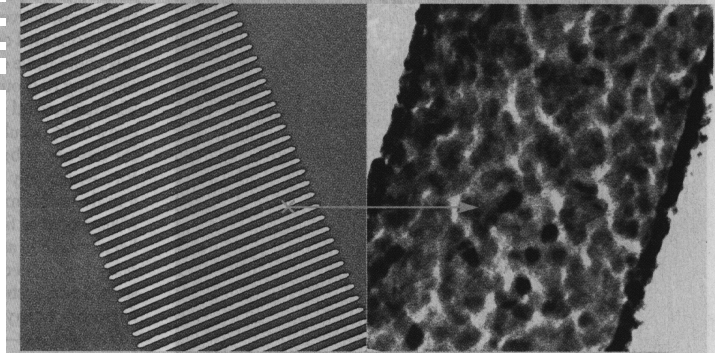
Teleportation of objects larger than subatomic particles? Sure, but ..... INTERFERING ATOMS (Discover, 1996) Stopping atoms in their tracks is not the only way to get them to show their wavelike nature. Another way is to throw them at a grating with slits so small and tightly spaced that each atom wave passes through two slits at once and is thus split in two. The split waves can then be recombined to produce an interference pattern‑alternating bands of intensity in which the matter waves either cancel each other or reinforce each other, just as interfering light waves do. MIT physicist David Pritchard first measured such atomic interference in 1988. Last February Pritchard and his colleagues reported another first: using the silicon nitride grating shown here, whose slits are just a few hundred‑millionths of an inch apart, they managed to separate the split atom waves enough to do separate experiments on them. (The closer the spacing of the slits, the more the waves diverge after they pass through the grating.) The researchers passed one of the waves through a gas or an electric field while leaving the other alone. By observing the effect on the interference pattern‑which is extremely sensitive to any tampering with one of the component waves Pritchard and his team made fundamental measurements that were not possible before. They measured the susceptibility of sodium atoms to electric fields and the degree to which sodium atom waves are refracted‑bent and attenuated‑as they pass through another gas and the atoms in that gas attract them. Physicists armed with optical interferometers have been able to make similar measurements on light waves for the last century or so‑but light waves are 10,000 times longer than atom waves, which means they can be diffracted with much coarser gratings than the one in Pritchard's atom interferometer. Pritchard has managed to send entire sodium molecules through his device, and in principle, even something as large as a living bacterium could hurtle through it in wave form. But quantum mechanical trade‑offs mean that such a large chunk of matter would take thousands of years to pass through the grating. For the moment at least, physicists must be content with finally being able to exploit the wave nature of atoms.
-
I had no idea that it was originally conceived as a MMO game; when that got too expensive, two of the developers started writing it as a novel under a pseudonym
-
Hundreds of years in the future, things are different than what we are used to after humans have colonized the solar system and Mars has become an independent military power. Rising tensions between Earth and Mars have put them on the brink of war. Against this backdrop, a hardened detective and a rogue ship's captain come together to investigate the case of a missing young woman. The investigation leads them on a race across the solar system that could expose the greatest conspiracy in human history.
-
A very Arthur C. Clarke (reminiscent of the "Rendezvous with Rama" saga) esque novel series. A plausible near future situation (some of the saga has been adapted by the SyFy channel in their series "The Expanse" https://www.amazon.com/Expanse-Boxed-Set-Leviathan-Calibans/dp/0316311294/ref=sr_1_1_sspa?ie=UTF8&qid=1549569175&sr=8-1-spons&keywords=the+expanse&psc=1
-
- 1
-
-
It's said that everyone should see at least one Flaming Lips concert before they die. That said, and at $3.49, you can't afford not to https://www.amazon.com/U-F-Os-At-Zoo-Legendary-Oklahoma/dp/B000PUB28E SELECTIONS: 1. The Freaks Get Restless and Wake the Animals (interstitial) 2. The Mothership Descends (interstitial) 3. Race For The Prize 4. Free Radicals 5. Expecting Everyones Head To Explode (interstitial) 6. Yoshimi Battles The Pink Robots 7. Yoshimi Battles The Pink Robots, Part 2 8. Should We Free The Animals (interstitial) 9. Vein Of Stars 10. Hot Dog Eating Contest (interstitial) 11. The Yeah Yeah Yeah Song 12. The Spark That Bled 13. Preparing The U.F.O. Mothership (interstitial) 14. The W.A.N.D. 15. My Cosmic Autumn Rebellion 16. Santas And Aliens (interstitial) 17. She Dont Use Jelly 18. Do You Realize?? 19. How Much Red Duct Tape? (interstitial) 20. A Spoonful Weighs A Ton 21. Captain America Splits The Audience (interstitial) 22. Love Yer Brain 23. The Mothership Departs (interstitial) 24. The Greatest Audience In The Galaxy (interstitial)
-
- 1
-
-
Bjork - All is full of love
-
the outer rim What is Quantum Spin?
RichP714 posted a topic in The Outer Rim's Fun with Quantum theory
QFD physicists like to use colorful terminology for attributes of sub-atomic particles. 'Spin' as used by QFD theorists has nothing to do with rotation of a mass. So what is it? This refresher will come in handy later -
the outer rim Energy doesn't flow the way you think
RichP714 replied to RichP714's topic in The Outer Rim's Outer Rim Topics
a companion piece; debunks the majority of the cable industry claims -
Very groovy; you might like this one;
-
If more people understood the difference between flow and charge, there'd be less BS talk about propagation delay, dielectric slew et al in the cable industry
- 1 reply
-
- 2
-
-
the outer rim Mathematics of laundry unveiled
RichP714 posted a topic in The Outer Rim's Outer Rim Topics
Mathematics of laundry unveiled (Science News, 1992) Have you ever wondered why laundry hung on a clothesline dries from the top down? This question so piqued the curiosity of Erik B. Hansen, a mathematician at the Technical University of Denmark in Lyngby, that he applied the rigor of mathematical modeling to the problem. Hansen reports on the secret life of laundry in the October issue of SIAM JOURNAL ON APPLIED MATHEMATICS. "In almost everything you do, from shaving in the morning to putting your pajamas on at night, you'll find some interesting mathematics, and drying laundry is no exception," comments John Ockendon of the Mathematical Institute at the University of Oxford in England. The most obvious explanation for top-down drying—that gravity draws the water down and out of the fabric until it is completely dry—is incorrect, says Hansen. Gravity is involved but it plays a secondary role. Hansen explains that water resides in discrete pores within damp cloth. Capillary forces act on these isolated islands of water, counterbalancing the tug of gravity Therefore, gravity cannot pull water out of cloth in a continuous sheet. Then what does cause clothes to dry from the top down? Hansen came up with an explanation for this phenomenon and used it to build his mathematical model of drying laundry. In the model, vertical air movement causes top-down drying. To dry hanging laundry must be cooler than the surrounding air. The air right next to the garment is also cooler, and therefore heavier, than the air around it. Gravity pulls this cooler air down across the surface of the cloth. The air current soaks up evaporated water, becoming more saturated as it sinks. Since the air flow can carry away less water vapor at the bottom than at the top, the garment dries from the top down. But does real laundry behave as Hansen's model says it should? To find out, he used the model to predict the rate at which a garment should dry under certain conditions. Then he hung up a wet T-shirt and recorded what he observed. At first, the shirt dried more or less as predicted. As time passed, however, it began to dry more slowly. This came as no surprise to Hansen, because he had deliberately idealised some of the processes at work on the drying fabric. Despite these mixed results, Hansen claims success in reaching his general goal of better understanding the physics of drying laundry. This kind of applied mathematical study aids the general health of the field, says Ockendon, because "mathematics gets very sterile unless it has input from the real world, and [the] drying of laundry is a perfectly good example of how you get exciting new mathematics that you would never get if you just sat at your desk." No room to hang out? Try microwaves For consumers lacking the space or ambition to hang up their laundry to dry, mechanical clothes dryers are a must. Now, the appliance industry and the Electric Power Research Institute (EPRI) have joined forces to develop a machine that dries garments with microwaves instead of hot air. According to John Kesselring, senior project manager at EPRI, the proposed appliance will dry clothing faster, more gently, and more efficiently than electric or gas-powered dryers. Instead of heating the entire garment, the microwaves selectively zap the water in damp clothing, Kesselring says. Conventional dryers can overstress and weaken fabrics in the course of heating them with hot air, he adds. EPRI plans to field-test commercial and residential versions of the new dryer next year. The U.S. Public Health Service Center for Devices and Radiological Health will evaluate the EPRI design to make sure it protects consumers from possible exposure to microwaves.-
- 1
-
-
Groovy stuff; fits in with ξ = Ø very well (e.g. the Occam's razor fail) What it is Why it's right Why it's wrong
- 1 reply
-
- 1
-
-
the outer rim The Perception of distortion
RichP714 posted a topic in The Outer Rim's Outer Rim Topics
Lots of juicy, anti-common sense stuff http://www.gedlee.com/Papers/The%20Perception%20of%20Distortion.pdf-
- 1
-
-
Not common sense compatible
RichP714 replied to RichP714's topic in The Outer Rim's Outer Rim Topics
Two different notions of 'flat' are at play here; for the flat earthers it's the physical shape of an object (spherical or planar) within a given 'space' (usually they are talking about Euclidian space (the typical X,Y and Z, in a cartesian grid, that we are familar with) for cosmologists, it's the 'shape' of the space itself, and by 'shape' they are not talking about appearance, they are talking about if that space behaves as if it is open, closed or flat Curvature Shape of the Universe -
High sensitivity/low sensitivity. ξ = Ø
RichP714 replied to RichP714's topic in The Outer Rim's Outer Rim Topics
https://www.jblpro.com/ProductAttachments/tn_v1n18.pdf Here's an article on flux compression: https://www.klippel.de/fileadmin/klippel/Files/Know_How/Application_Notes/AN_11_Flux_Modulation.pdf -
Zoe Kravitz Super Bowl ad wants to give you 'brain orgasms' https://news360.com/article/486695798
-
- 1
-