
Leaderboard



Popular Content
Showing content with the highest reputation on 08/01/2024 in all areas
-
Hello all. Recently picked up a nice looking Carver stack, a TX-12 tuner, C-16, and TFM-42. Saw it at a yard sale for a hilarious price and scooped it up instantly. I'd post pics of the gear but I don't think I can yet. Tuner seems to work fine, pre-amp works (as far as I can tell), but the amp is not working. It powers up, but seems to emit an audible hum from the case, and when I connected it to some old speakers is just made a very loud low hum before I switched it off. Lights on one channel flashed and the other stayed red. I understand Nelion is the place to go for a re-build, but not sure I want to make that investment. Oscillating between just trying to get it "repaired" and everything cleaned up, or listing it for sale and moving on. Anyway, if anyone has some reputable techs in the Chicago area that I can reach out to, please let me know. It seems to be nice stuff and I would love to get it up and running, but don't think I want to invest in a full rebuild right now. (although I would if I had very power hungry speakers) Thanks, and looking forward to reading through the forums when I get a chance!6 points
-
Bob is the reason I ended up affording to start building a stereo in 1984. I bought a MXR130 receiver and a DTL100 cd player with a pair of Clements RT7 speakers that i still have today. I have gradually changed and upgraded slowly to what I have today but my system is not elaborate. I now have a Prima Luna EVo 300, 2 Black magic 350's, denon DCD A110 SACD/CD player and a blue sound vault. I love the way my system sounds and Bob is the raeson I started my hobby as his designs are so pleasing to the eye which are timeless and never look out of date. Thanks Bob for being the great person that you are.2 points
-
Welcome, @BBJames, glad you found us. You have scored a great deal. If you want to let it go for what you paid for it, send me a PM. I live in the west suburbs, St. Charles/Geneva/Elgin area. Where (city) are you located? Maybe were close? HOWEVER, you should really get to hear this setup..., you will be amazed. And, it will be the beginning of your Carver audiophile journey. That amp is going to blow you away! OK, to answer your question..., just to get you on your journey, there is ONE place I suggest you take your TFM-42. This shop will identify the broken part, replace it, and charge you for labor and parts. They DO NOT (typically) do full recap and restoration..., which means that a week after you get it home, put it in your system, and are enjoying the setup, it could very well have a new issue. Any gear 35+ years old have consumable parts (electrolytic capacitors, for example) and are subject to adjustments and service bulletins (service bulletins may or may not have been applied in the amp's history) that will make the amp perform and sound better than new, and originally sounded out of the box back in the day when it was NEW! That place is a place called Deltronics. www.deltronics.com. They have TWO locations DO NOT go to the one downtown Chicago..., Go to the one in Woodridge, it's right off the freeway in a little strip mall. ASK FOR MIKE - call ahead and make an appointment. Mike is the only guy who has been around long enough and knows Carver gear and this amplifier. He's modest and a nice guy and has repaired a few Carver pieces for me. [Why Mike? the remaining techs in the two shops mostly repair band equipment, guitar amps, keyboards, synthesizers, etc..., and don't have experience repairing Carver gear and its unique design. Mike at Deltronics willl find the issue, repair/replace the one single part for you, and send you home with a working TFM-42, but unless you ask for a full recap and restoration, you have the risk of bringing it back again, when the next age-related thing fails. OK, the logic here is that you could spend as much, or more, with this strategy. Your time, travel/mileage, expense can be minimized. FedEx or drive (it's doable in a day) to Hersey, MI and give the amp to Nelion for a full restoration. Why? Get it done once, and done completely, fully. The overall cost will be worth it. Check the numbers, compare it to $100/hr labor for diagnosis and repair, plus parts, and you'll see what I mean. Again, great to meet another Carver fan in the Chicago-land area. I hope our paths cross.1 point
-
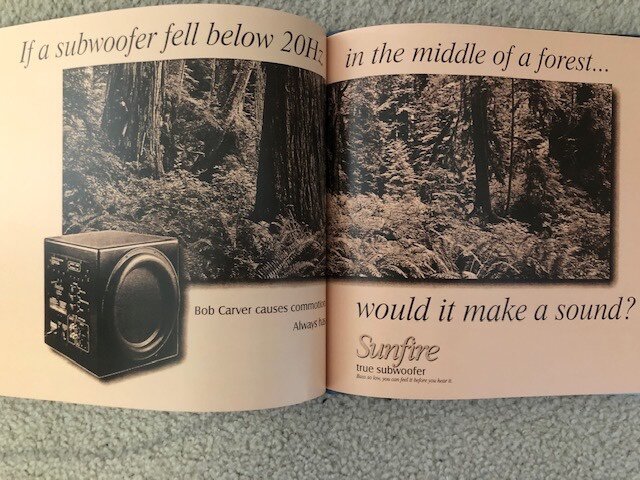
Hallo everybody, here Gianluca from Italy, Sound engineer (mostly live) with an electronic passion! I have a small personal lab where I try to fix stuff for me and for friends, and where I build some audio effects. Actually I've realized I have several friends with Sunfire subwoofers...this is why I'm here!1 point
-
1 point
-
Nice find. I don't personally know of anyone in the Chicago area for repair work but hopefully someone else here will chime in. And if you don't want to sink the money into repair work right now, I'm sure you could move the C-16 and amp along as-is and let someone else make that investment.1 point
-
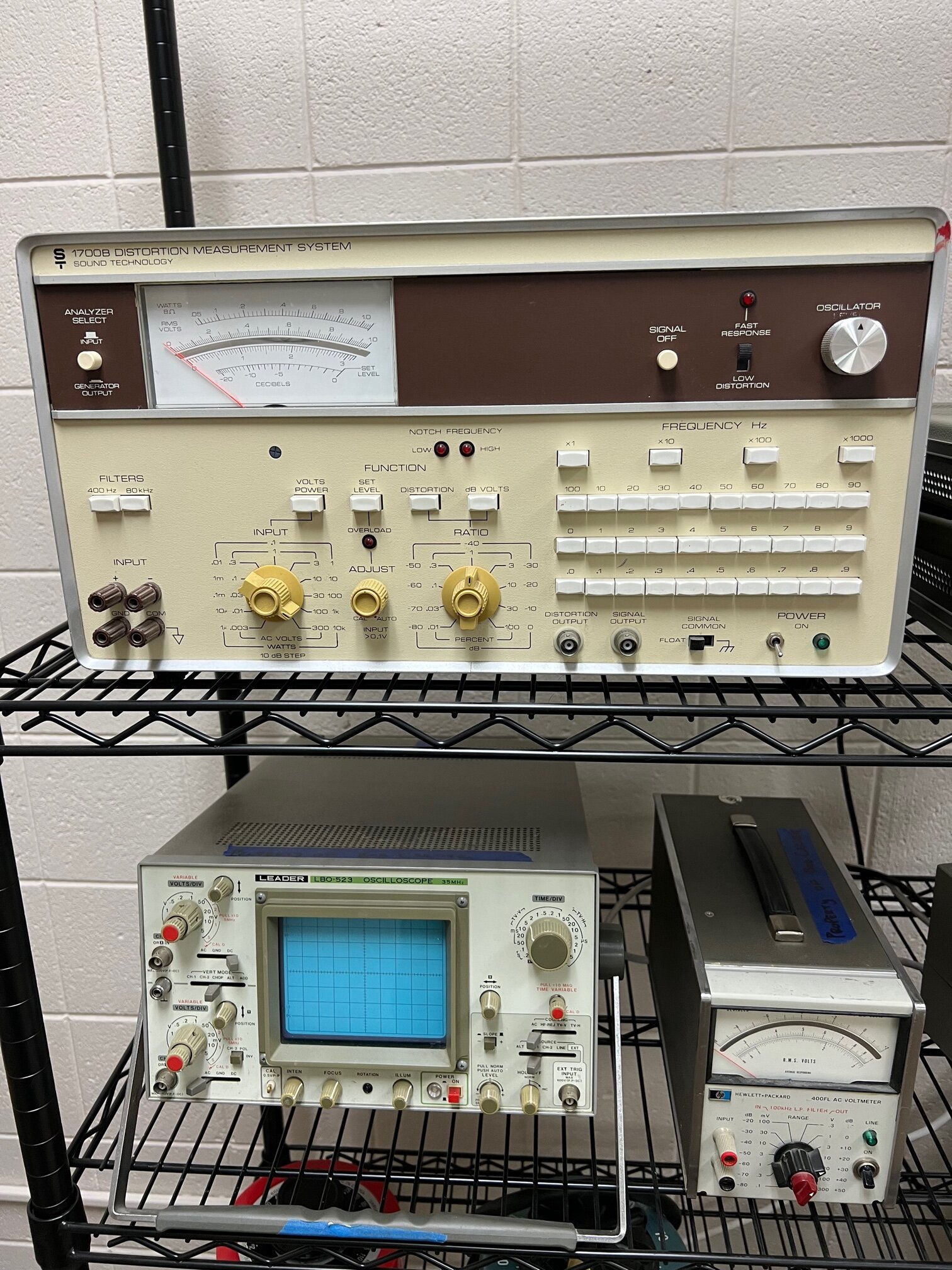
Note the old school distortion analyzer on Bob's bench in the picture of him holding the M400 in one hand. Here is Bob's analyzer that is at the factory today. It looks about the same, although Carver Corp and Sunfire had many I'm sure. He knows these tools extremely well. The scope and voltmeter with the blue tape are Bob's. He has gear at his lab in Snohomish and gear at the factory in Illinois. Either location he is at, the gear he is super proficient with is on hand.
 1 point
 -
Some pictures.

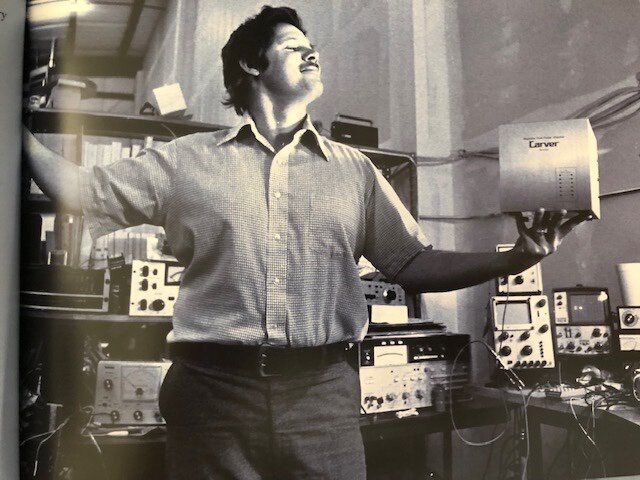
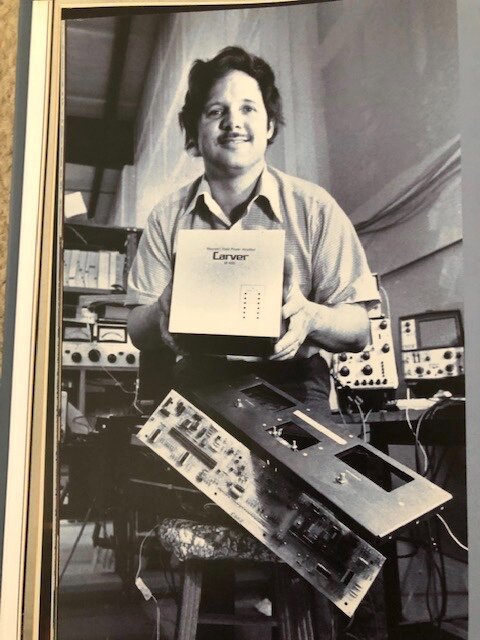


 1 point
 -
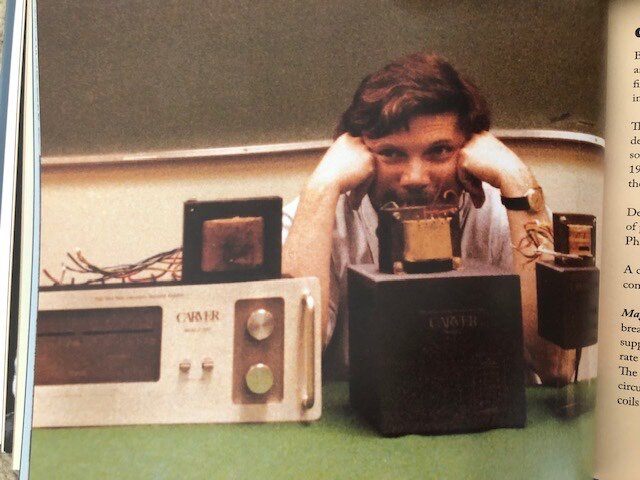
The amount of work Bob has done in his career is impressive. Not only do we have Bobs black book of most recent designs in the factory vault, there are volumes of notebooks detailing his experiments over decades of research. Bob has literally worn the numbers off his favorite model, of at least one HP Scientific Calculator and was given an NOS model, found by a customer, to replace the worn out unit. Here is a small sample of the notes Bob has taken.

 1 point
 -
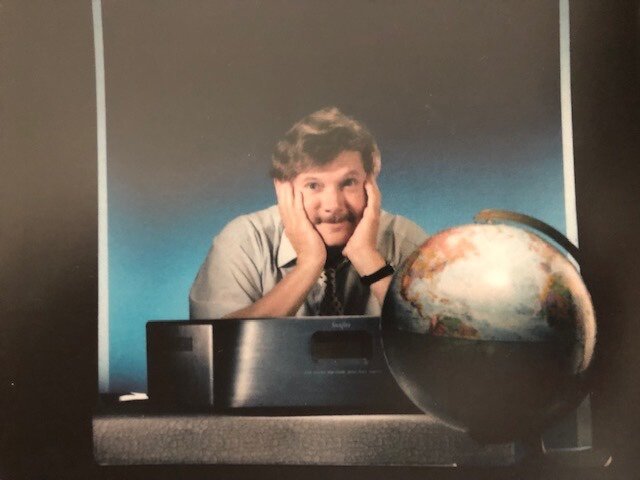
Another important innovation of Bob's that turned out to be a very significant step forward in modern vacuum tube amplifier design is the incorporation of the 6AL5 tube in the circuit or the 'DC restorer' as Bob referred to it at the time of invention. This tube is found in all his 180 vacuum tube amps and includes even the higher power Cherry and Black vacuum tube amp versions. I went back to the original auction page he used when he held the amp auctions on ebay (circa 2008-2009) and in Bob's own words here is how he describes the function of this innovative circuit, which keeps the grids of the KT-88 power tubes from going into non-linear operation and restores stability during dynamic music passages. The end result is much cleaner sound even at high volume levels : "Every vacuum tube amp in the world suffers from shifting DC operating points and this unfortunately has remained a functional limitation and maddening sore point for amplifiers designers ever since the very beginning of vacuum tubes. Consequently I had to invent a DC restorer circuit using an 6AL5 / 5726 tube; it eliminates every last vestige of DC shift, while simultaneously reducing distortion three-fold and vacuum tube idle power by the same." Whoever writes his book I hope they include this picture of Bob. Although Bob is a very humble individual I think he should be recognized for his many outstanding accomplishments that have changed the direction of audio design in the USA and around the world! If there can be an embodiment of the "humble maverick" I think Bob is it...
 1 point
 -
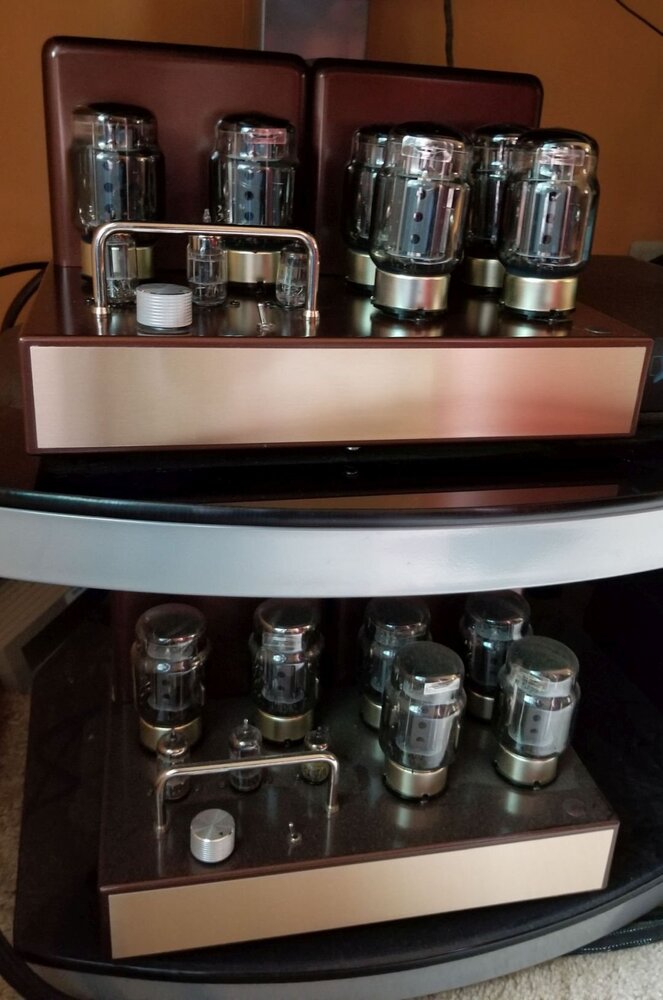
There are so many examples of Bob's maverick designs that it is hard to believe that anyone could be in any doubt about his innovations. I have been fortunate enough to have owned a few really excellent examples of Bob's work and each of these examples are designs with truly exceptional abilities and in many ways each pushes the limits of conventional design by a wide margin. When I bought my Rootbeer 180s from Bob over ten years ago he told me that the idle current on the KT-88s was so low that the tubes would last for decades. I was a bit skeptical at first but that was in 2009 and now, in 2022, after 13 years of operation I have never had to replace a single power tube and both mono amps continue to operate superbly on the same tubes. Bob has been true to his word! The other example I would like to share involves his CARVER VACUUM TUBE REFERENCE Model-1 Preamp. I have owned a turntable for many years that has an extremely low-output phono cartridge mounted on it. We are talking about .1 to .2 mv output. This is the Ortofon MC2000 phono cartridge from the 1980s. It was an excellent performer and was J Gordon Holt's (editor of Stereophile magazine) favorite cartridge back in the day. Well I was never able to use it with ANY preamp on the market because any preamp I tried would either have too low of gain or would have too much hum in the output. Never got it to work with anything. I recently got it out to see if it would work with Bob's VACCUM TUBE REFERENCE preamp and I was surprised and very amazed with how well it sounded and also the fact that I could not hear ANY hum from the output even at full volume! Here is a picture of the perfect match up of that SOTA turntable, Souther linear arm with the very finicky Ortofon MC2000 cartridge. Now, after many years of frustration, I can actually put this excellent cartridge to work. These are but two examples and I'm sure members have many more stories to tell about Bob innovations. Although I have talked with Bob over the phone many times I have never met him in person....but I am really looking forward to finally meeting him at CARVERFEST this year. Have to agree with Ar9Jim...CARVER designs are truly exceptional!
 1 point
 -
Bobs wife Peggy has has accumulated lots of history. I will continue record conversations with Bob often, for the historical reference. Peggy assembled an audio history based book (shown here). She is cautious to release it, due to other companies mentioned, until sure there are no copyright issues. The audio history of Bob is only 1/2 the story, the man himself is just as interesting. The personal stories from his childhood forward need to be recorded. His going to school in Germany as a child and speaking German, while his parental father, Tom Carver, was an attorney working on the Nuremberg Trails of Nazi war criminals after WWII and much more. Just an amazing life that reads like a Hollywood movie..Here is a picture of the book Peggy wrote. It is on display at the Illinois factory.
 1 point
 -
Agreed. I'll buy a few copies. @Ar9Jim knows more. 😉1 point
-
I seriously hope someone is actively working on a biography of Bob1 point
-
Here is a some info that will be posted on the new website and store. Bob wrote this today. The web designer, Ron K, will put his touches on it. Ron is the same guy that has worked with Bob for decades and did the Carver ads back in the 1980s. I'll post the final version in a separate post when its finished. Bob Carver Amplifier Design Philosophy - What Sounds Good? Since the early days, after earning my physics degrees, my approach to audio design has created controversy. My unconventional approach has brought both criticism and accolades. World wide recognition for achieving musical excellence for my wonderful fans, while offering a more affordable product, compared to most other brands of comparable products, is a great pursuit. My amplifiers have often been smaller, lighter and less costly than others, while remaining powerful, musical, and accurate. These designs and their musical performance, compared to others are quite successful. What Makes An Amplifier Sound good? Dynamic power, low distortion and wide frequency response. My tube amplifiers have high voltage (B+) and the power supplies have ability to ‘bounce' and increase voltage, closely tracking the musical load with very little distortion.This is an important key to a musical performance. Do You Design Amplifiers Using Load Resistors or Speakers? Both. On my bench I start out with resistors, then I use different speakers, with a scope and voltmeter connected, while playing music and measuring the amp and speakers reacting together. The back EMF that is present makes speakers slightly easier to drive. Power response, by design, tapers below 80Hz, yet frequency response goes below 20Hz. My designs will drive difficult loudspeaker loads, playing music far better than the specifications listed, without clipping, and with lots of headroom available. These long held design targets have served the industry well. The designs have delivered excellent performing, highly musical products that more people could afford, without sacrificing the powerful and musical performance when powering loudspeakers. Stay tuned for more of my very latest designs and the on-line store coming soon.1 point
-
.....fertile, innovation and prolific immagination...... I love that. Wish we had more like him around.1 point


.thumb.jpg.bd01cad9371554033557e35b9a182fea.jpg)


