


Daddyjt
-
Posts
6,981 -
Joined
-
Last visited
-
Days Won
252
Content Type
Forums
Events
Articles
Downloads
Gallery
Store
Everything posted by Daddyjt
-
Ahhh, youth -- I remember lusting over the Advents when I was in my 20s.... Looks good!! Nice job!
-
Gene, Ok, so I have to ask -- what if you were to toe OUT slightly?? After all, more is always better... Right? :-) I would try it myself, but I am out of town on business at the moment... But I WILL be moving the RF7's around as soon as I get home tomorrow night!
-
Now THAT'S what I'M talking about!! Point the speakers wherever the h[ll you want, and JUST CRANK IT
-
Here's a good snippet from The Absolute Sound a few years back.... Rule O: Toe-in (angling the loudspeakers toward the listener) affects tonal balance, soundstage width, and image focus. Toe-in is pointing the loudspeakers inward toward the listener rather than facing them straight ahead (see Fig. 3). There are no rules for toe-in; the optimum amount varies greatly with the loudspeaker and the listening room. Some loudspeakers need toe-in; others work best firing straight ahead. Toe-in affects many aspects of the musical presentation, including mid- and high-frequency balance, soundstage focus, sense of spaciousness, and immediacy. 12-3-toe-in.jpg Most loudspeakers sound the brightest directly on-axis (directly in front of the loudspeaker). Toe-in therefore increases the amount of treble heard at the listening seat. An overly bright loudspeaker can often be tamed by pointing the loudspeaker straight ahead. Some models, designed for listening without toe-in, are far too bright on-axis. A toed-in loudspeaker will present more direct energy to the listener and project less energy into the room, where it might reach the listener only after reflecting from room surfaces. As well see later in this chapter, sound reflected from the sidewalls to the listening positions can degrade sound quality. Toe-in often increases soundstage focus and image specificity. When toed-in, many loudspeakers provide a more focused and sharply delineated soundstage. Images are more clearly defined, compact, and tight, rather than diffuse and lacking a specific spatial position. The optimum toe-in is often a trade-off between too much treble and a strong central image. With lots of toe-in, the soundstage snaps into focus, but the presentation is often too bright. With no toe-in, the treble balance is smoother, but the imaging is more vague. Toe-in also affects the presentations overall spaciousness. No toe-in produces a larger, more billowy, less precise soundstage. Instruments are less clearly delineated, but the presentation is bigger and more expansive. Toeing-in the loudspeakers shrinks the apparent size of the soundstage, but allows more precise image localization. Again, the proper amount of toe-in depends on the loudspeaker, room, and personal preference. Theres no substitute for listening, adjusting toe-in, and listening again. Identical toe-in for each loudspeaker is vital. This is most easily accomplished by measuring the distances from the rear wall to each of the loudspeakers rear edges; these distances will differ according to the degree of toe-in. Repeat this procedure on the other loudspeaker, adjusting its toe-in so that the distances match those of the first loudspeaker. Another way to ensure identical toe-in is to sit in the listening seat and look at the loudspeakers inside edges. You should see the same amount of each loudspeaker cabinets inner side panel. Identical toe-in is essential to soundstaging because the speakers frequency response at the listening position changes with toe-in, and hearing the identical frequency response from each speaker is an important contributor to precise image placement within the soundstage. Keep in mind that all loudspeaker placement variations are interactive with one another, particularly toe-in and the distance between loudspeakers. For example, a wide soundstage can be achieved with narrow placement but no toe-in, or wide placement with extreme toe-in.
-
A bunch of incredibly interesting info - thanks! One more question - so for amplifiers and other electronic components (with the exception of possibly turntables), there is no force being generated - so is there any benefit to (de) coupling?
-
Thanks for the great link - interesting article! Although now I am really confused....:-)
-
I guess I am also curious about the whole "de-coupling" thing as well... They sell special feet, matts, and platforms for amplifiers and other components to sit on... I suppose I can see the benefit for a turntable, but not so sure about anything else. Not trying to be ignorant, just curious.
-
Copy that on the pita to move. Also, trying to convince the wife that there is a reason for 100lb speakers to sit on spikes, AND that said spikes will NOT hurt the carpet...
-
Just curious what the opinions are on the benefits of spiked feet on speakers. I am running Klipsch RF7s, and they came with screw-in spikes for the "feet". Should I install them? My speakers sit on carpet, which is over a concrete basement floor. Any and all suggestions welcome.
-
I guess that kinda makes sense - there is no way, once the amplified signal gets to the speaker, to further "boost" the bass level. To achieve a perceived bass "boost", you would have to attenuate the mid range/treble. Never really thought about it, but that thought is consistent with what you are seeing in the guts of the speaker....
-
Glad you like it Gene! Thanks to all those who showed interest. Enjoy the music!
-
My random # generator picked Gene C - congrats Gene!! Thanks everyone who expressed interest:-) Probably more to come...
-
Just a "last call" - I am going to draw a name this afternoon, as I am heading out of town for a business trip Sunday, and want to get this in the mail to the lucky winner tomorrow, before I leave. Thanks:-)
-
All newbies welcom then!
-
Thanks! Just didn't want to violate any rules - there's your answer Soulofsound - I assume you are in?
-
Just a question to whomever can answer - am I ok to consider fellow newbies for my karma item?
-
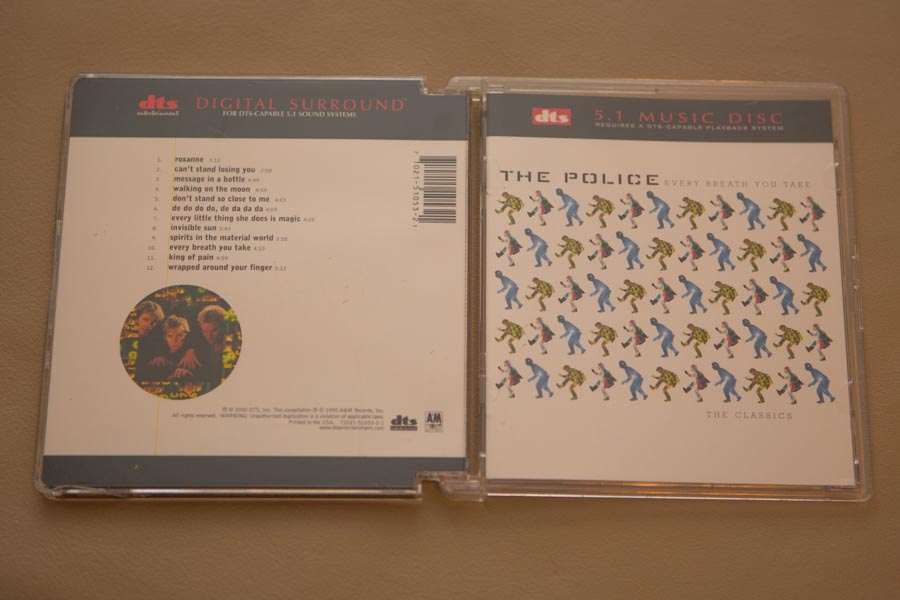
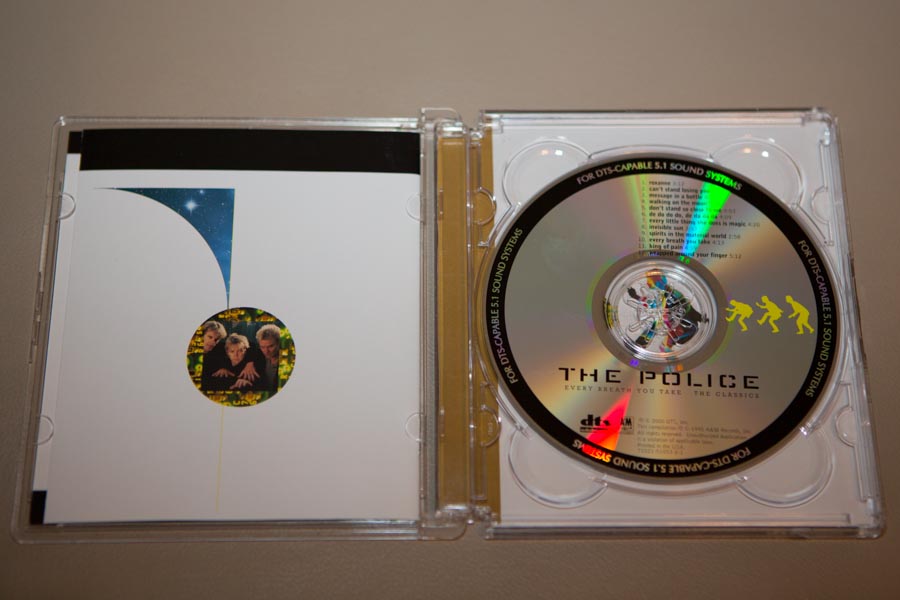
I hope I am allowed to do this as a "newbie" - In going through my collection, I realized I own two copies of this cd. Say IN, and I will randomly choose a winner this weekend! This ia a DTS 24 bit / 96k cd, and it sounds wonderful! It's in mint condition as well...
-
Stereo_dog - when you list Dire Straights / Brothers In Arms, what format are you playing? I use that one a lot too, in the SACD format, and I can't really imagine it being any better, but I'm always open to options:-)
-
What is the first album or track you listen to when you want to compare/test something on your system? New amp? New speakers? Change your sub phase? New cables? What's your benchmark recording AND format? I always seem to go to Patricia Barber's Cafe Blue on SACD...
-
Ok, so that was a "well duh" moment... Never thought of looking in the most obvious place! Thanks for the lead - much appreciated:-)
-
I know both formats are all but dead, but does anyone know where I can "pick the carcass", and expand my collection before they are all gone?
-

New Carver owner here!
Daddyjt replied to canuckaudioguy's topic in The Welcome Shop (Please read first)
Jeffery, I am kinda in the same boat as you - although I would say I am not NEW to Carver, I am newly inspired by Carver. I bought an A400x about 20 years ago - my first separate amplifier, which left me running center and rears off my receiver. Then I bought a TFM 55x a couple of years later, for my fronts, and used the A400x for my center and surrounds (surround channel was mono back in those days!) Fast forward to about 3 years ago, I decided to get a "high-end" amp for my fronts. I tried Adcom, Bryston, and Rotel. I kept going back to my TFM 55x, and now settled on a pair of 1.0ts running my fronts. If I had to sum it up, I would say that the thing that keeps me comming back to Carver, is the fact that Carver has an HONEST sound. If you feed them a crappy signal, they won't turn it into something beautiful, but if you feed them a good signal, you get absolute magic! They don't add "warmth", "depth", "air", or anything else -- they just amplify exactly what you give them, which should be the ultimate goal, IMO. As far as this site, I LOVE the fact that it is filled with REAL people who love music - not a bunch of snooty audio files who look down on anything that's not tube or vinyl (not that there is ANYTHING wrong with either, but I for one get tired of being told that I don't appreciate great sound, because I use transistor amps and digital sources) Welcome, and ENJOY THE MUSIC!! -
My photos